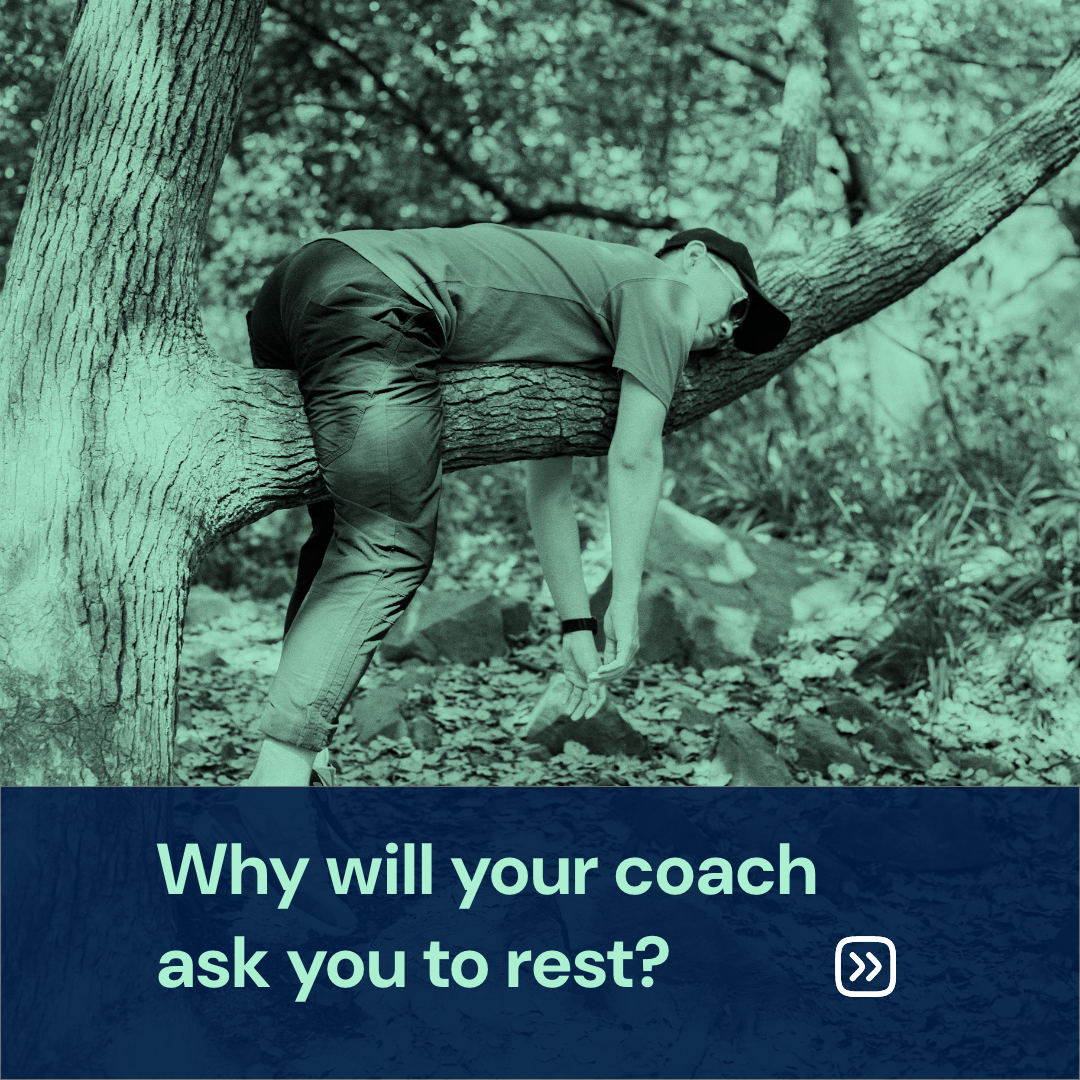
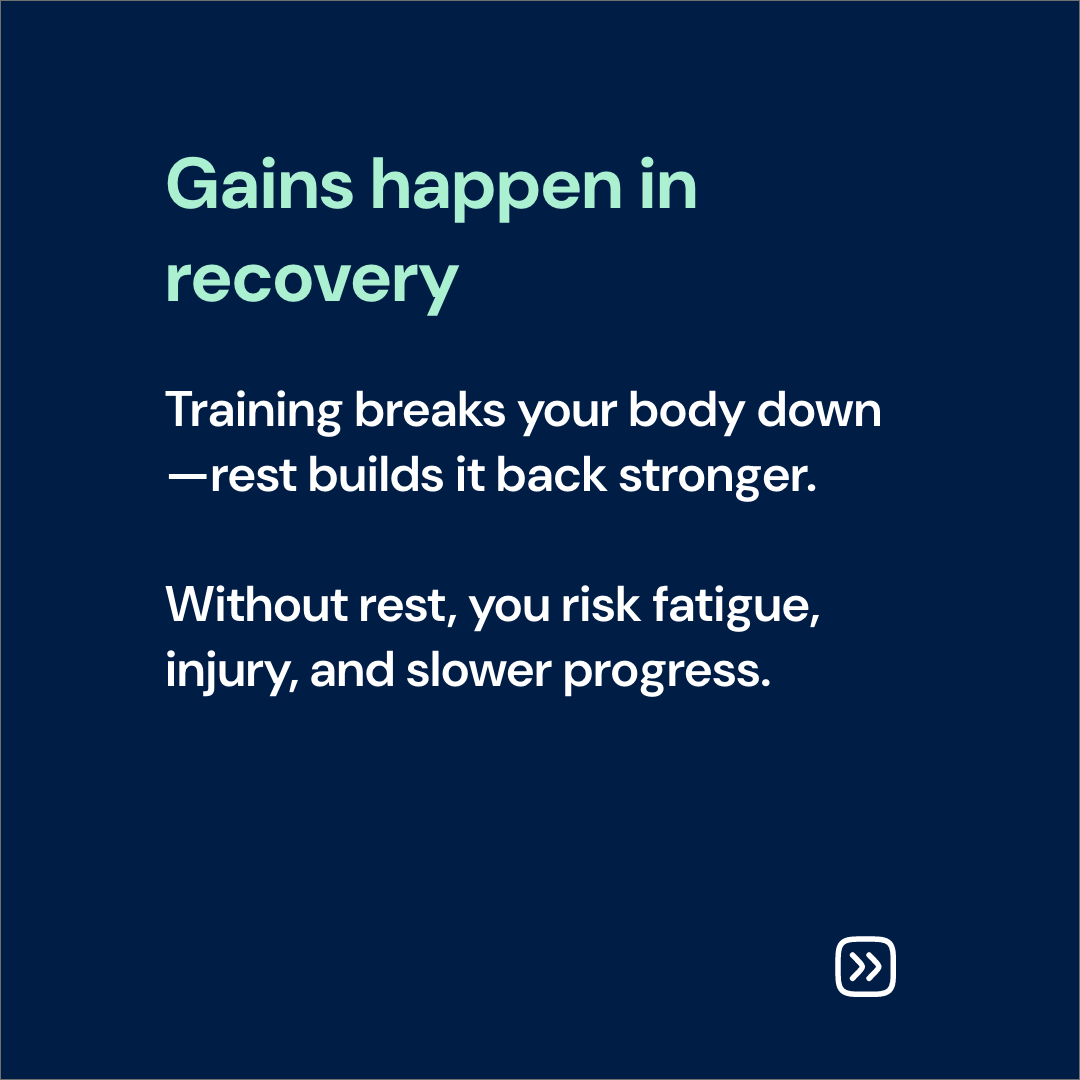
It’s easy to think that more training = more gains, but here’s the truth: you get stronger when you rest, not just when you ride.
Training can push your body to its limits, breaking down muscle fibres, depleting energy stores, and stressing your nervous system. But, if you don’t give your body time to recover, you’ll start feeling sluggish, struggle to hit your targets, and risk injury or burnout.
So what’s the best way to recover? Balance is key. Some days should be full rest — feet up, proper sleep, and good nutrition. Other days, an easy spin (think coffee ride effort!) can help blood flow and loosen stiff legs. For more on what truly easy riding looks like, including Zone 1-2 intensity and conversational pace guidelines. Studies show that muscle repair, glycogen replenishment, and neuromuscular adaptations occur after training, not during it (Knuiman et al., 2018).
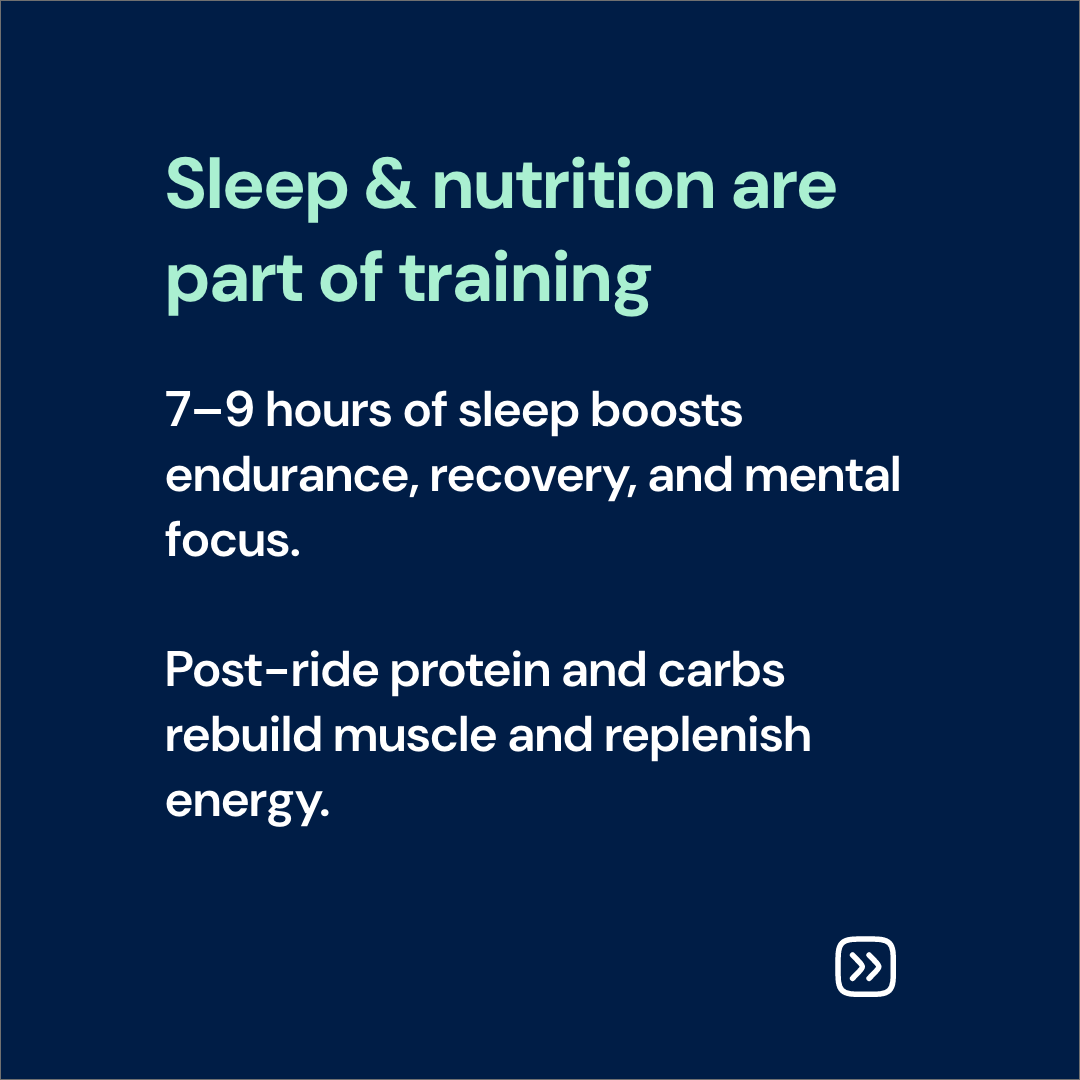
Sleep is your secret weapon. Aim for at least 7 – 9 hours a night to help your muscles repair and keep your energy levels high. 7+ hours per night enhances endurance and cognitive function (Halson, 2014). And don’t forget nutrition — protein rebuilds muscle, and carbs restock your fuel stores. For specific targets and timing, see post-ride recovery protocols including protein and carb calculations.
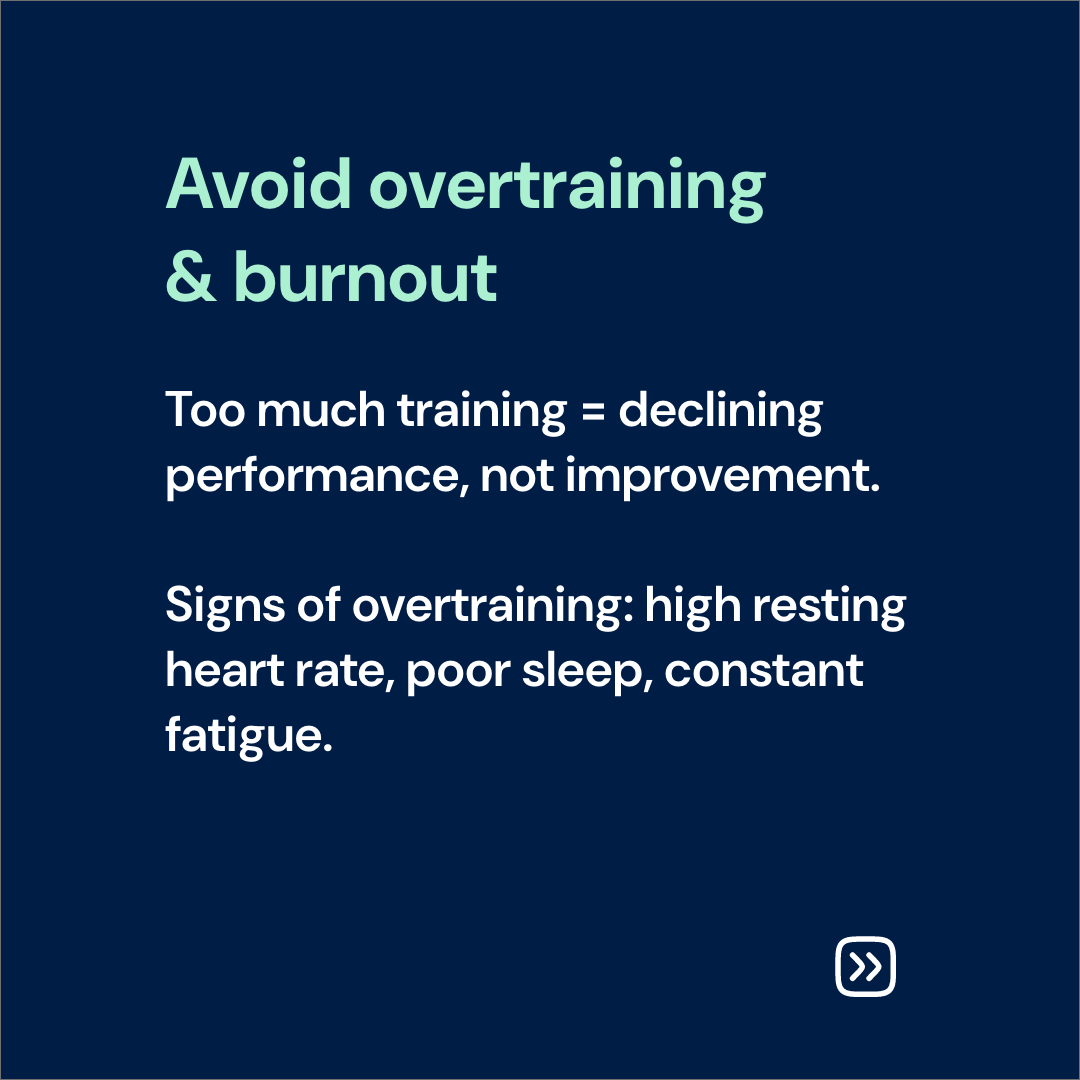
How do you know if you’re overtraining? Watch out for signs like a higher-than-normal resting heart rate, constant fatigue, or feeling demotivated. Tools like heart rate variability (HRV) tracking can help spot when you need extra rest. If symptoms persist or you're dealing with illness, read about when to rest versus when to push through using the neck rule.
Recovery isn’t lazy — it’s smart training. Give your body what it needs, and you’ll be stronger, faster, and ready to go the distance.
Sources:
Knuiman, P., et al. (2018). Optimising Post-Exercise Recovery: Nutritional Considerations.
Halson, S. (2014). Sleep in Elite Athletes and its Implications for Performance.