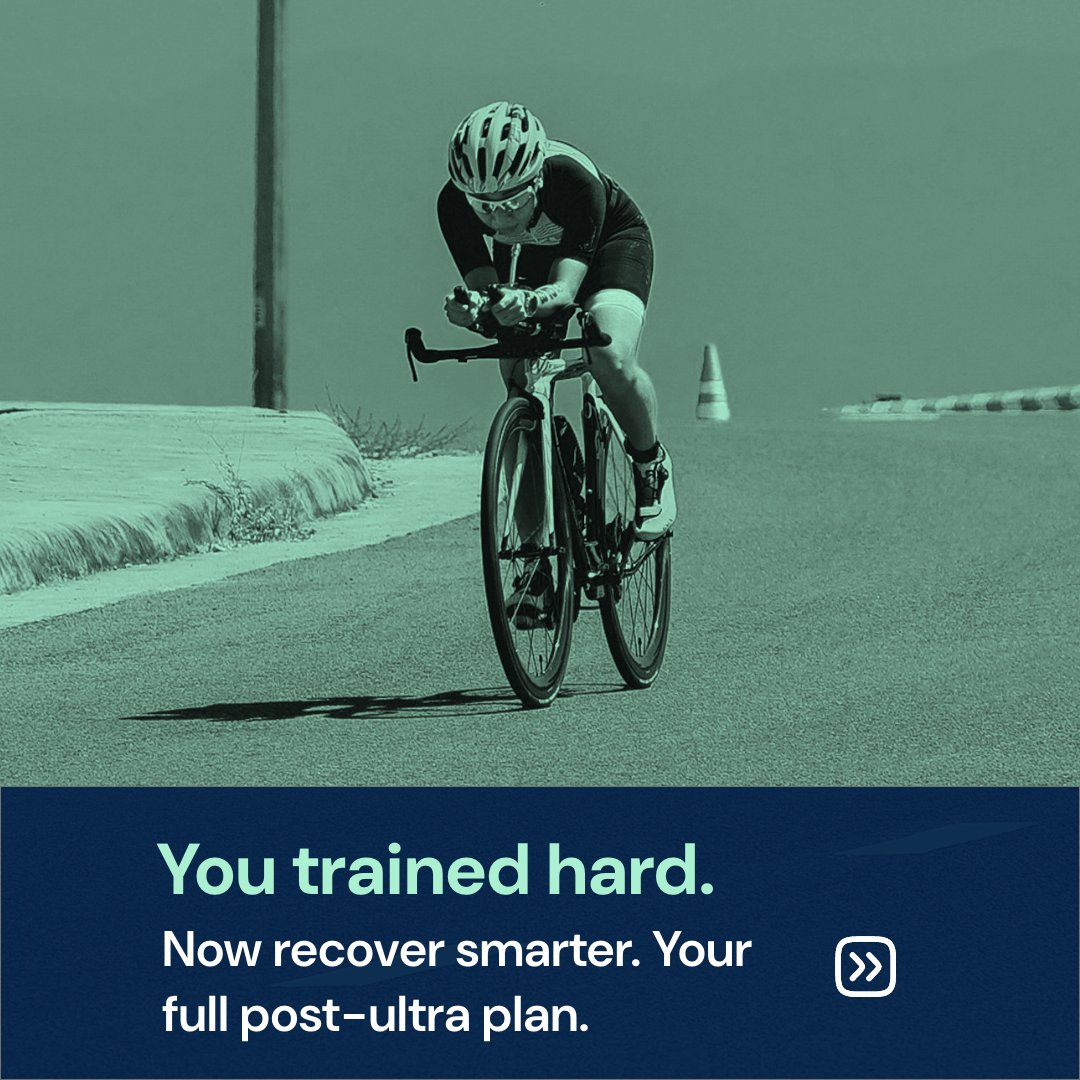

Forget about "bouncing straight back" — a smart recovery plan now means you'll be riding stronger later.
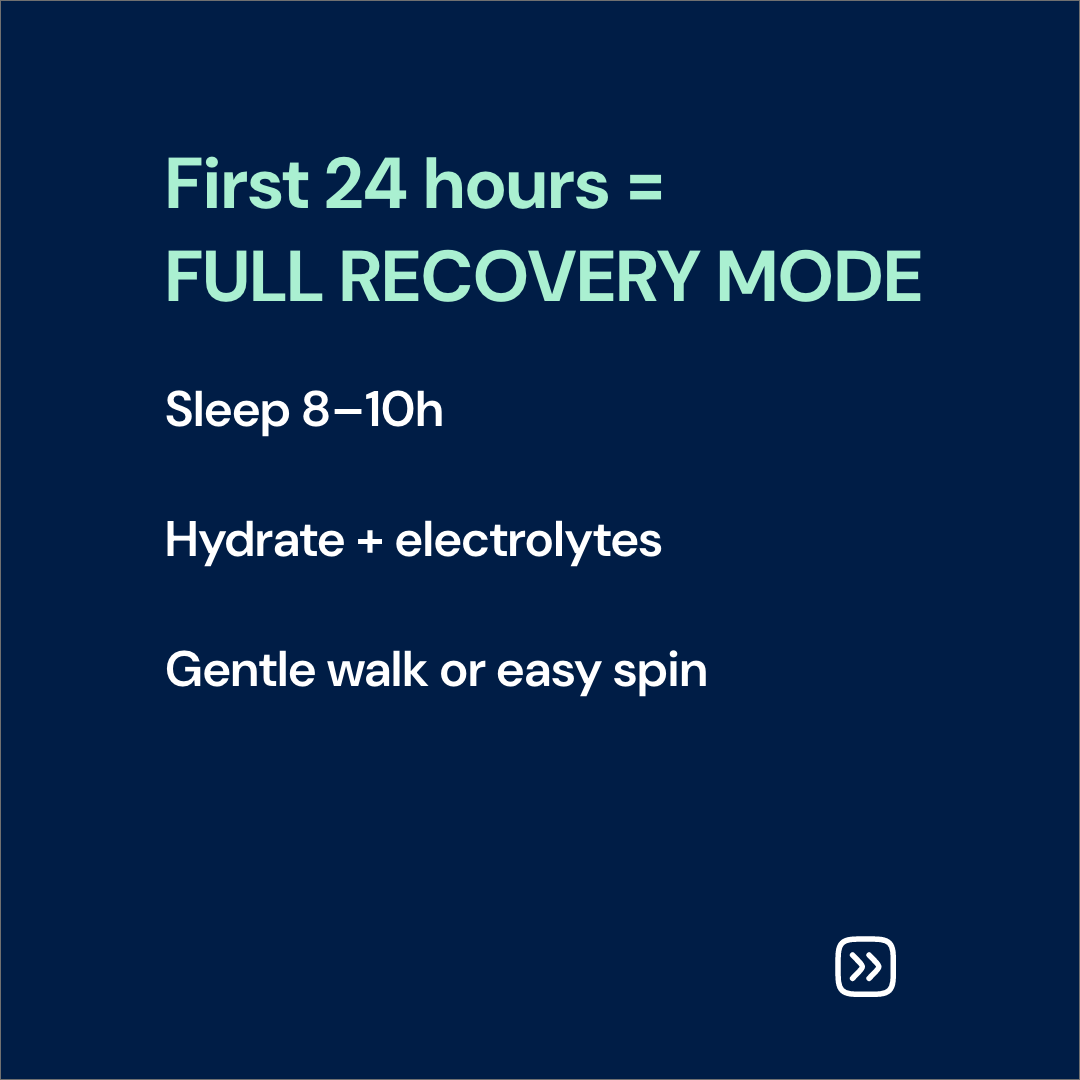
First 24 hours:
- Get as much sleep as you can. Aim for 8–10 hours (seriously). Deep sleep boosts recovery hormones.
- Keep sipping fluids and mix in electrolytes to replace what you lost out there.
- Move a little: think 20–30 mins walking or spinning, easy enough to nose-breathe the whole time.
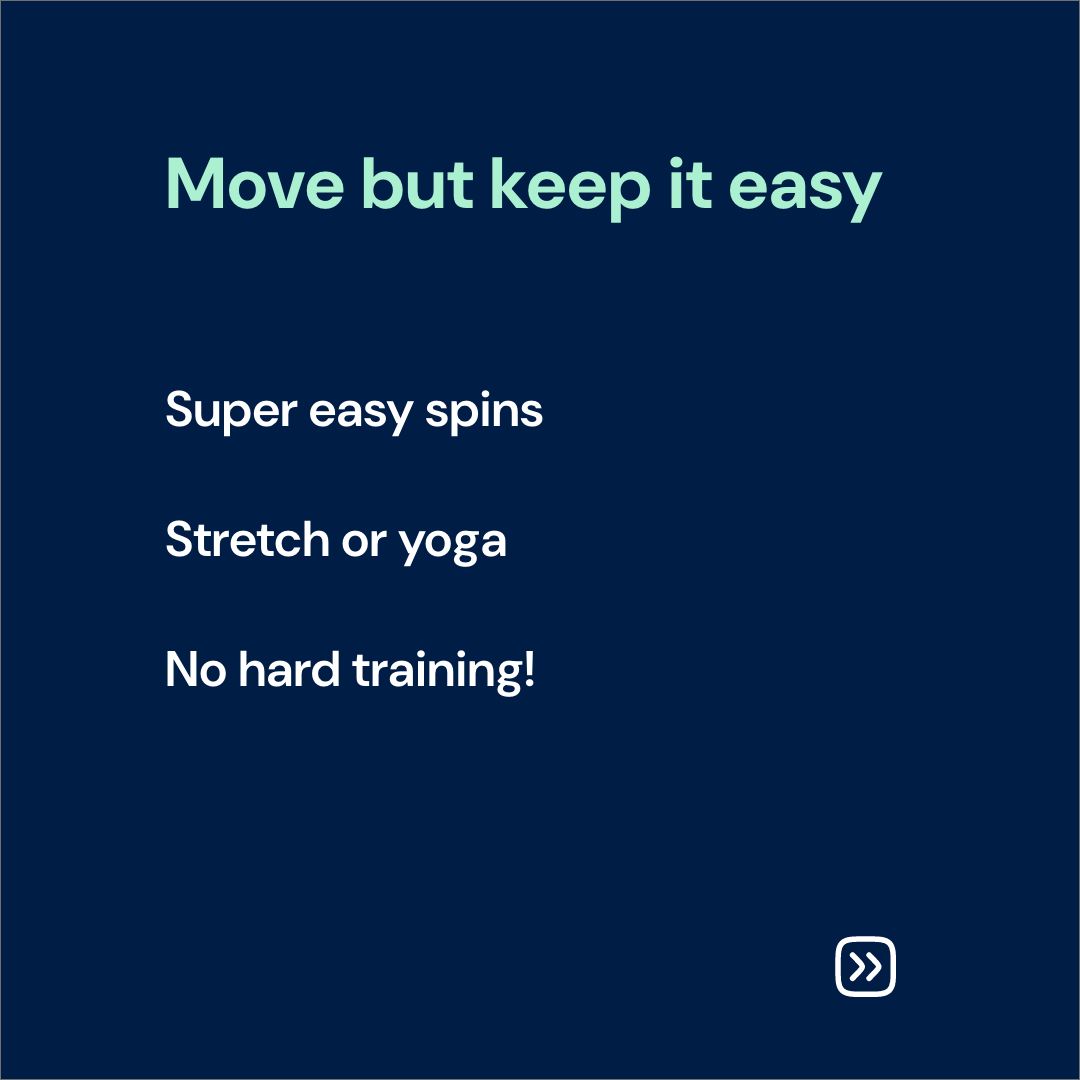
Next few days:
- Short easy rides only, keeping heart rate super low (<60% of max, Zone 1). This is true easy riding at conversational pace where you can chat freely without breathlessness.
- Stretch, do some mobility work, and check in with your body.
- No “training sessions” yet — save the big sessions for when your legs feel fresh again. Understanding why rest builds fitness rather than destroys it helps you commit to proper recovery.
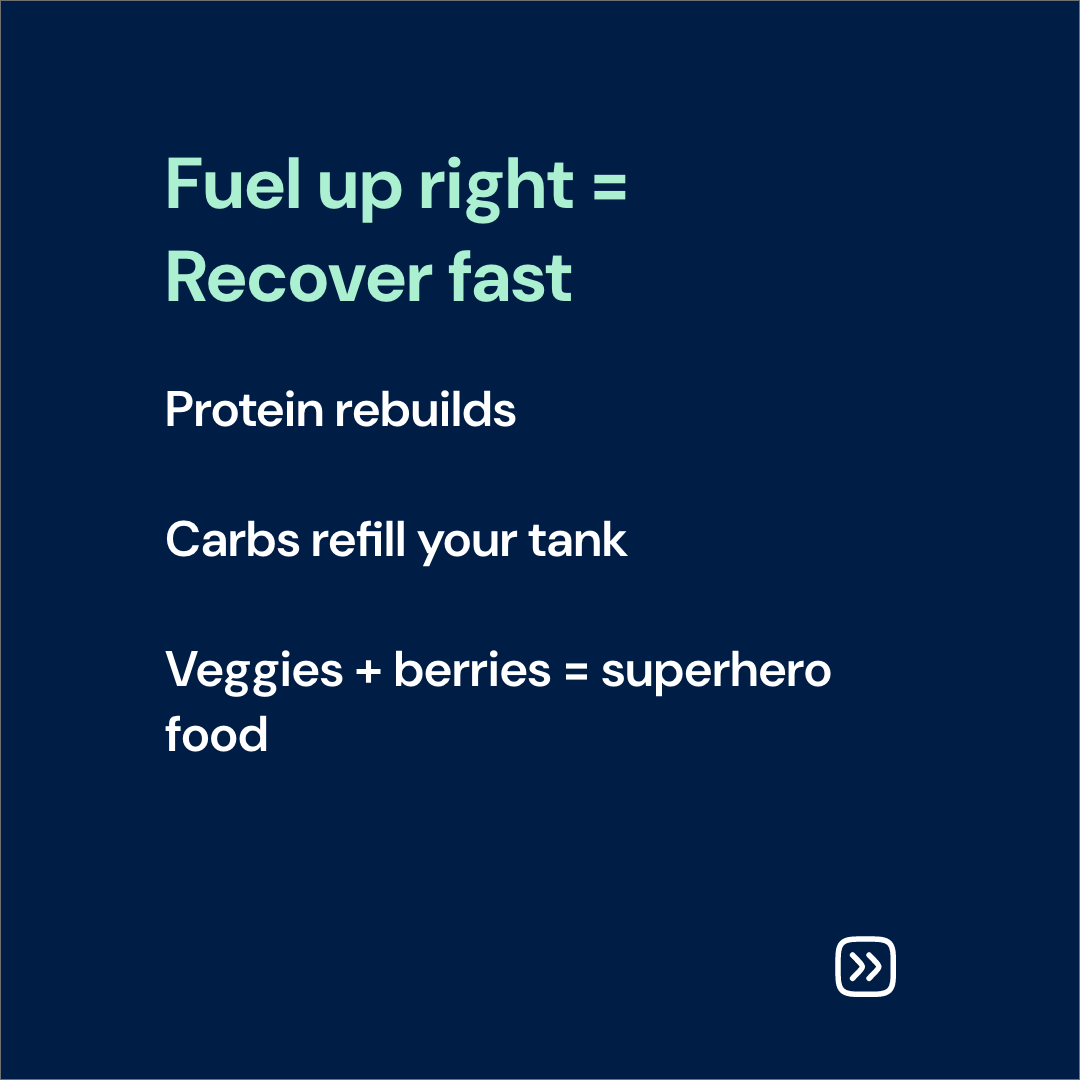
Fuel up right:
- Hit your protein goals (1.6–2.2g/kg bodyweight) to rebuild muscle.
- Refill your carbs properly (5–7g/kg/day) so you are not running on empty.
- Load up on colourful veg, berries, oily fish — anything that fights inflammation and boosts recovery.
Bonus tip:
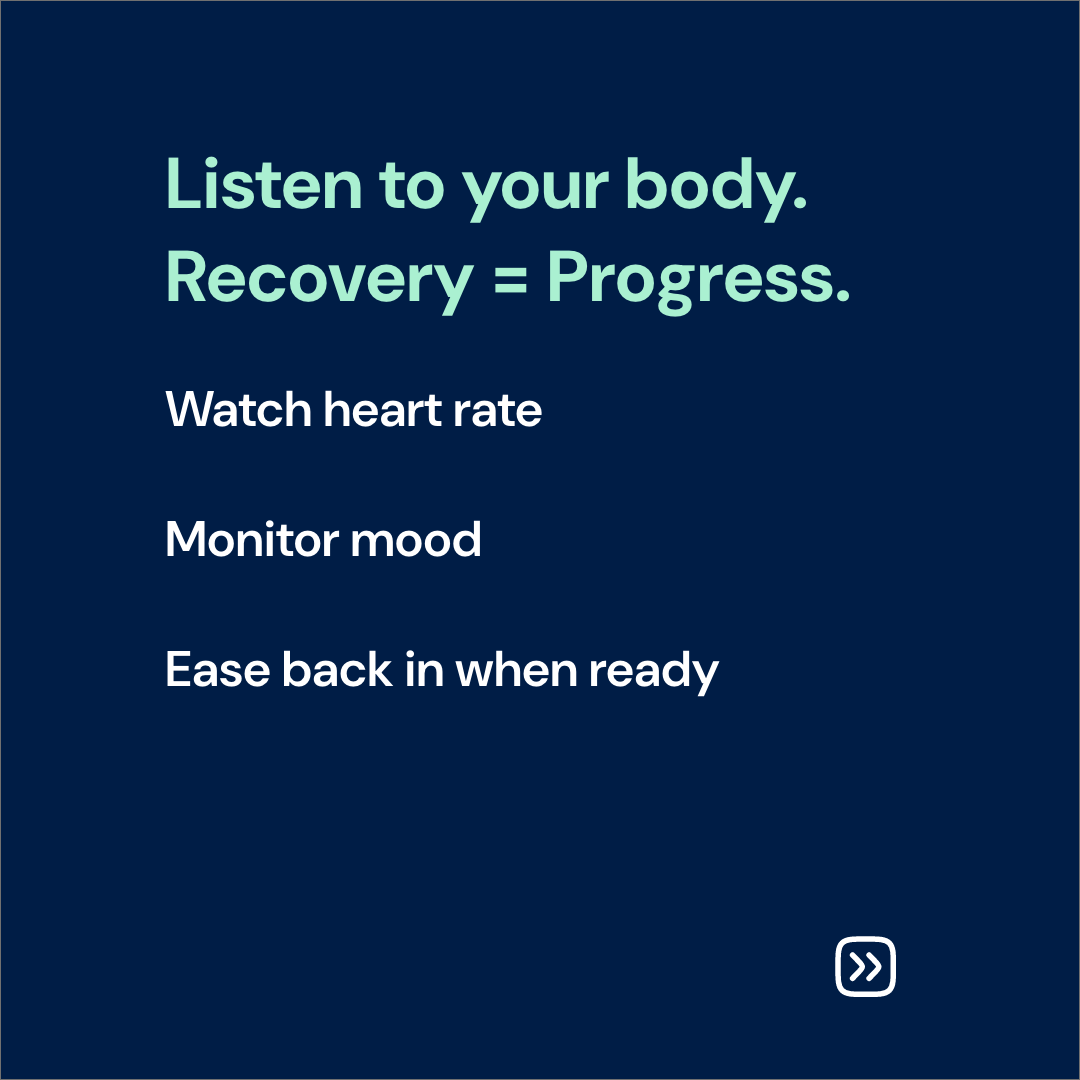
- Keep an eye on your morning heart rate and general mood. If your heart rate stays high or you feel flat, give it more time. If you're feeling genuinely unwell rather than just tired, learn when to rest versus when to push through using the neck rule. Recovery is a long game — and it is where real fitness happens.
Be patient with the recovery and listen to your body. You'll be back out on the bike soon enough but in better shape to start training again.