Paris-Brest-Paris isn't just another long ride. It's the world's oldest cycling event still running, dating back to 1891, and it happens once every four years. The next edition runs in August 2027, and if you're considering it, you need to understand the two-year qualification pathway that starts in 2026.
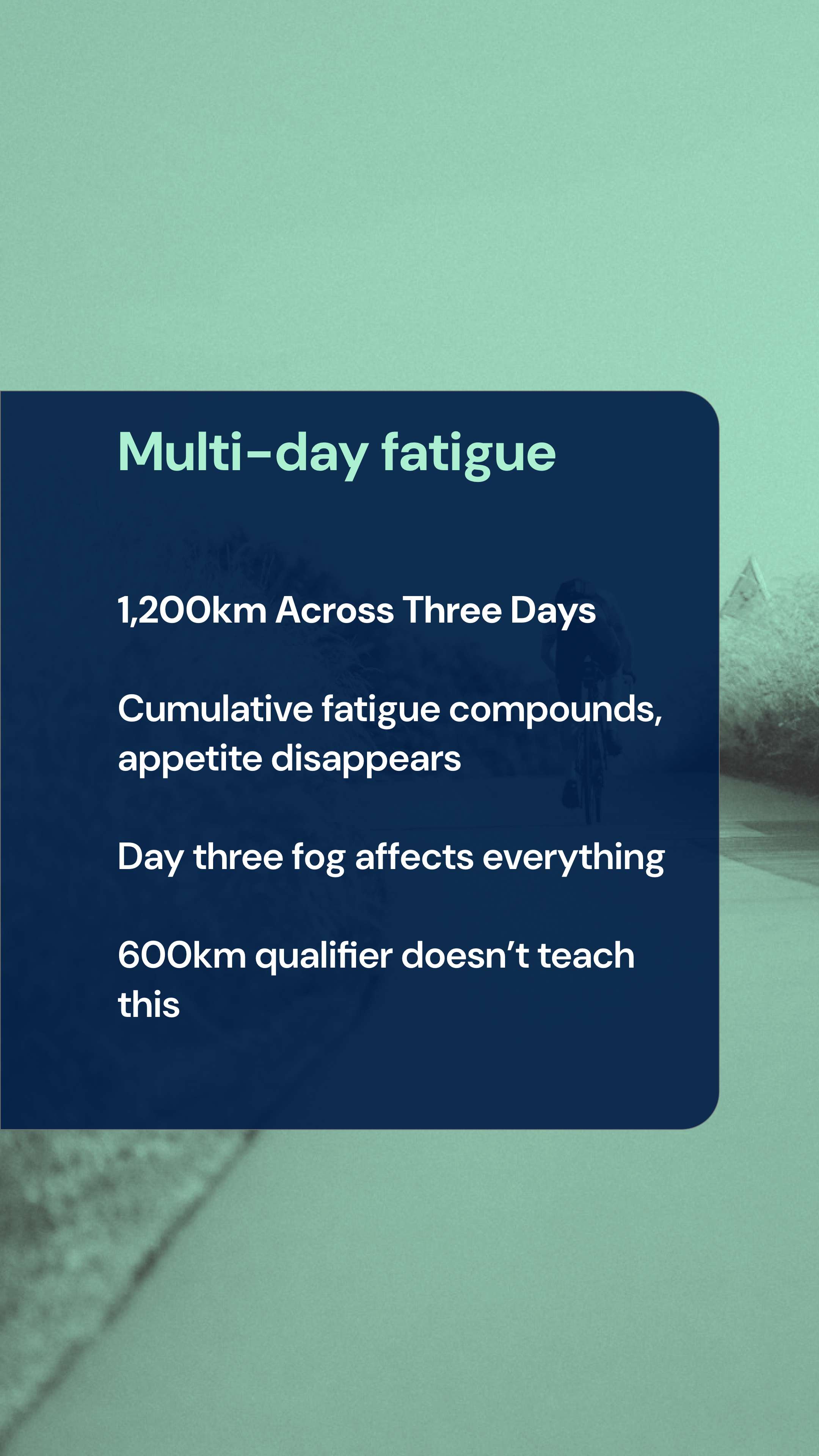
1,200 kilometres from Paris to Brest and back. 90 hours to complete it. Several thousand riders from across the globe, all starting within a few days of each other. It's randonneuring's equivalent of a pilgrimage. Riders speak about it differently than other events. But respect and romance aside, PBP presents specific challenges that catch out riders who underestimate what 1,200km across France actually demands.
This isn't about scaring anyone off. It's about understanding what you're signing up for before you book the ferry.
What is Paris-Brest-Paris?
Paris-Brest-Paris is a 1,200km randonnée: a non-competitive long-distance cycling event where riders must complete the distance within a set time limit whilst passing through mandatory controls. The route runs from Rambouillet (southwest of Paris) to Brest on the Brittany coast, then back to Rambouillet. The event covers approximately 1,218km with 11,500 metres of climbing.
You have 90 hours to finish. That's 3 days, 18 hours. Unlike many UK audax events, there's no extended time limit option. 90 hours is what everyone gets.
The event runs every four years, typically in August. Places are strictly limited to 8,000 riders, and the event typically sells out during the priority registration phase. This is why the qualification process matters so much.
PBP isn't a race. There are no prizes, no podiums, no age-group rankings. You're riding for a finisher's medal and the satisfaction of completing something that most cyclists never attempt. But don't mistake "non-competitive" for "easy." The 90-hour limit is tight enough that poor pacing, inefficient controls, or inadequate sleep planning will see you running out of time before Rambouillet.
The Two-Year Qualification Pathway
PBP 2027 requires a two-year qualification process. This isn't like entering a sportive where you simply register and turn up. You need to plan ahead. An experienced audax coach can help guide you through the qualification process with comprehensive audax training plans.
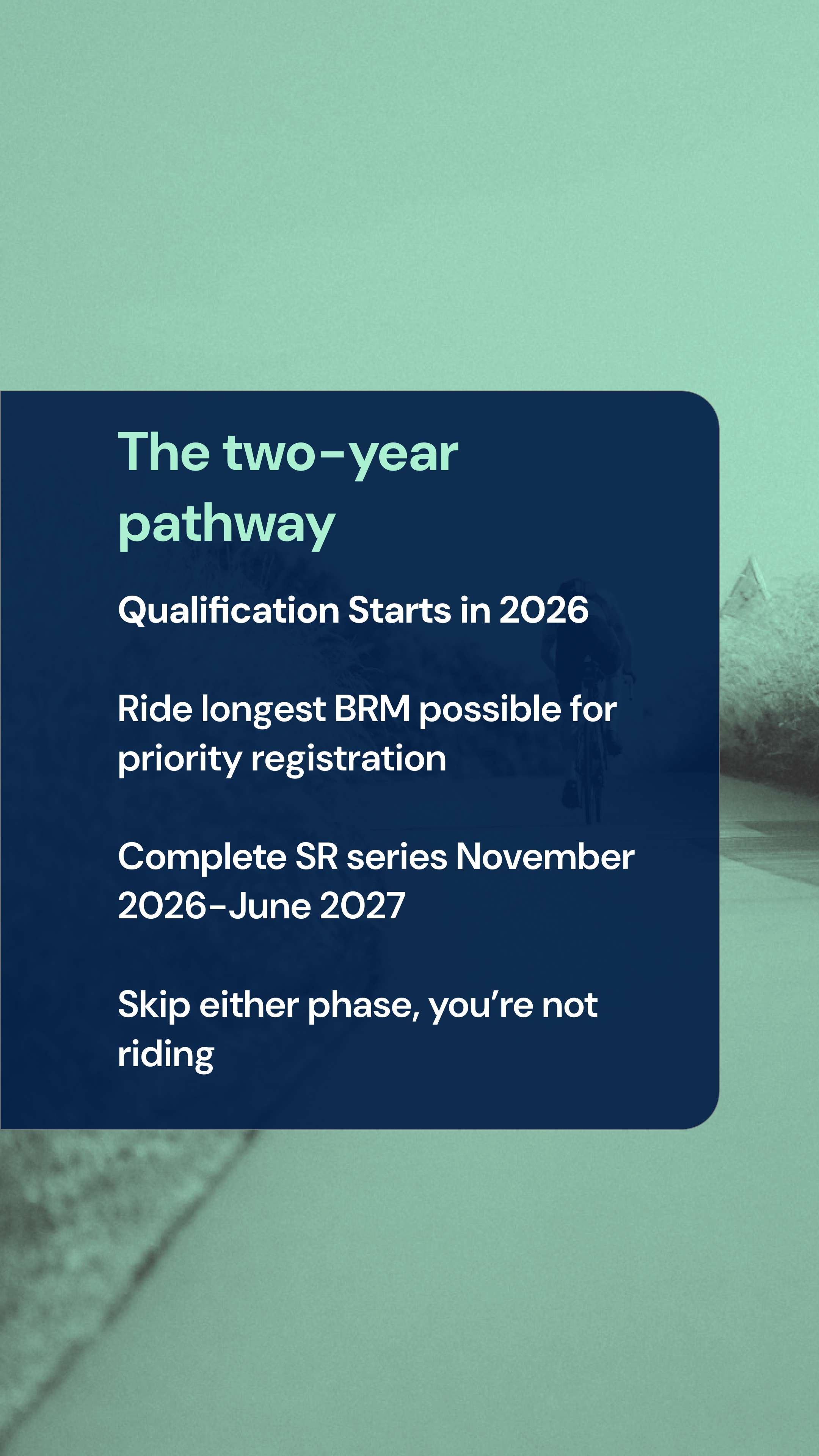
Phase 1: Priority Registration Rides (November 2025 to October 2026)
During 2026, you should ride the longest Brevet de Randonneurs Mondiaux (BRM) distance you can manage. These rides aren't mandatory, but they're effectively essential if you want to secure a place. PBP is limited to 8,000 riders, and spots typically sell out before general registration opens.
Your longest 2026 ride determines when you can pre-register in early 2027:
- Complete 1000km or 1200km in 2026: Priority registration opens mid-January 2027
- Complete 600km in 2026: Priority registration opens late January 2027
- Complete 400km in 2026: Priority registration opens mid-February 2027
- Complete 300km in 2026: Priority registration opens late February 2027
- Complete 200km in 2026: Priority registration opens mid-March 2027
- Complete no qualifying rides in 2026: You're hoping for leftover places after March, which is risky
The message is clear: if you're serious about PBP 2027, you should be riding long brevets during 2026. Without a 2026 ride, you may not get a place at all.
Phase 2: Mandatory Qualification (November 2026 to June 2027)
Once you've pre-registered in early 2027, you must complete a Super Randonneur (SR) series to validate your entry. All rides must be ACP-sanctioned (Audax Club Parisien certified) brevets.
The SR series requires completing four distances:
- 200km brevet (maximum 13.5 hours)
- 300km brevet (maximum 20 hours)
- 400km brevet (maximum 27 hours)
- 600km brevet (maximum 40 hours)
All four must be completed between November 2026 and June 30th 2027. Each ride must have a unique homologation number. You can substitute a longer ride for a shorter one (for example, complete two 600km rides instead of a 400km and a 600km), but you must still have four separate brevet completions with different homologation codes.
Miss the June 30th deadline for your SR series, and you lose your entry despite having paid your deposit and secured your place.
Phase 3: Registration Timeline
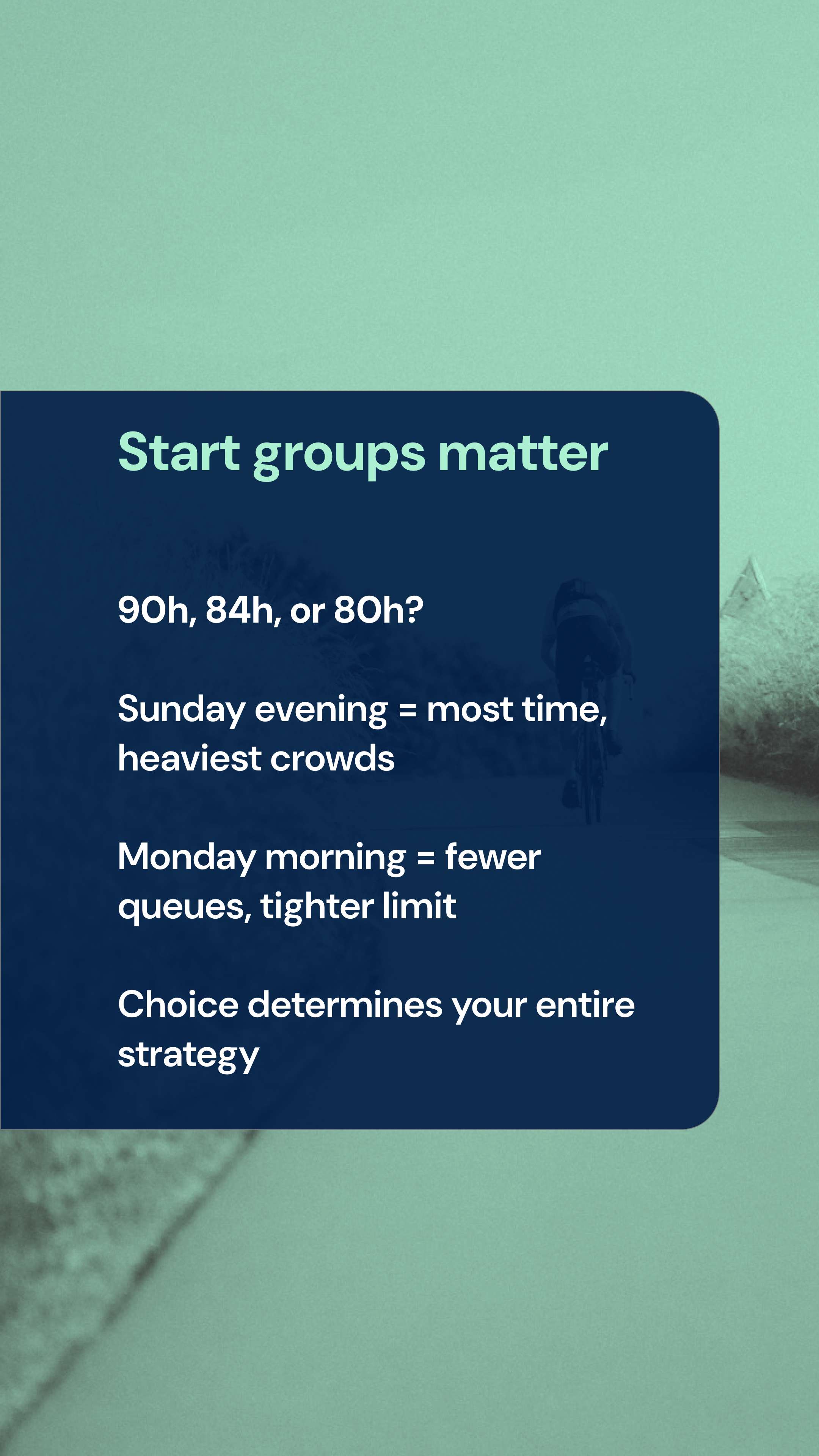
- January to March 2027: Pre-register based on your 2026 ride. Pay €50 deposit and select your start group and wave. The 90-hour group (Sunday evening start) is most common, the 84-hour group (Monday morning start) avoids early control congestion, and the 80-hour group (Sunday afternoon start) suits faster riders.
- May 29th 2027: Full registration opens. Enter homologation codes for at least three of your four 2027 qualifiers
- June 12th 2027: Deadline to initiate full registration. Miss this and your reserved spot may be released
- July 4th 2027: Final deadline to upload your fourth qualifying ride code
In the UK, Audax UK (AUK) organises brevets that count toward your qualification. Check the AUK calendar early. Popular 600km rides fill months in advance, and if you miss the limited 600km opportunities in your region during spring 2027, you may need to travel considerable distances to find another before the June 30th deadline. Spring and early summer see the most brevet opportunities; options become sparse by late June.
The two-year process is deliberate. Ride long distances in 2026 to secure your priority registration slot. Complete your mandatory SR series in 2027 to validate your entry. Skip either phase, and you're not riding PBP.
The Control Challenge: Crowds and Chaos
Controls at PBP bear no resemblance to controls at smaller UK audax events.
At a typical 400km UK brevet, a control might be a village hall with 20 riders, a volunteer stamping brevet cards, and perhaps some biscuits. You're in and out in five minutes.
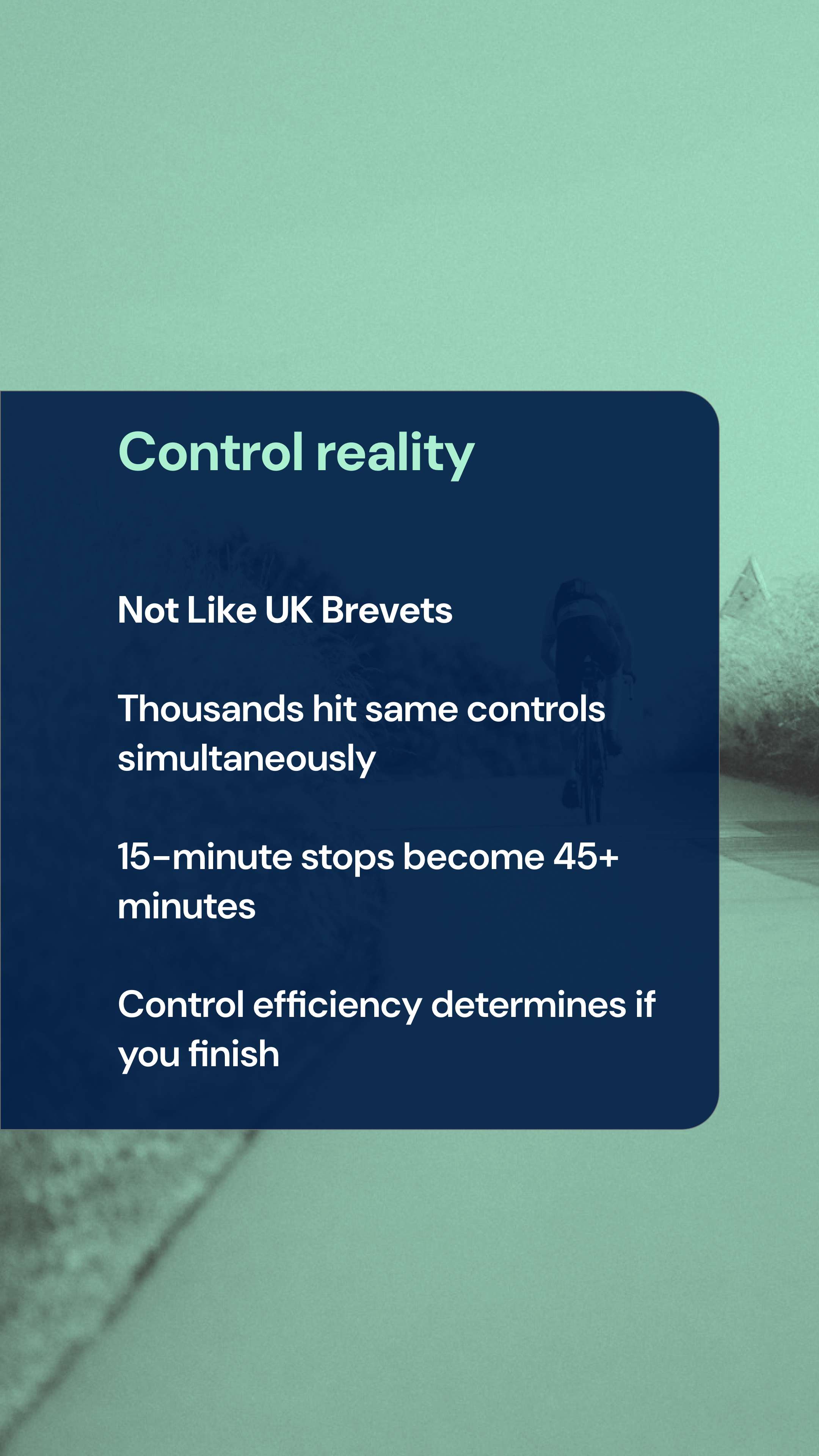
At PBP, controls are secondary schools, sports halls, and community centres temporarily converted into logistics hubs for thousands of cyclists. Arriving at a major control at peak times (particularly evening controls when most riders stop for dinner) means joining queues. Queues for the brevet stamp. Queues for food. Queues for toilets. Queues for the shower, if there are showers. What should take 15 minutes can easily consume 45 minutes or more if you arrive when hundreds of other riders have had the same idea.
Having ridden London-Edinburgh-London twice, I've experienced busy controls, but PBP operates at a completely different scale. LEL has perhaps 500-1,000 riders spread across multiple start groups. Even at Brampton, which sees the heaviest traffic as riders converge from different routes, you're dealing with dozens of riders at a time, not hundreds. The queues exist, but they're manageable. You can usually find floor space to sleep. The food queue moves.
PBP multiplies that by a factor of six or seven. With several thousand riders on the same route hitting the same controls within relatively narrow time windows, the scale of congestion is considerably larger. Major controls become bottlenecks that you cannot avoid but must manage. Based on reports from riders who've completed PBP, the shower queues, sleeping arrangements, and food service all operate under significantly more pressure than LEL controls.
Some riders try to minimise control time by carrying more food and only stopping for the mandatory brevet card stamp. This works on shorter brevets but becomes increasingly difficult over 1,200km. You cannot carry three days' worth of calories, and the mental toll of never properly stopping catches up eventually. You'll need to eat at controls, which means accepting that time spent queuing is part of the event.
The logistics of control stops become critical to your time management. At LEL, I learned that arriving at Brampton slightly off-peak meant finding a sleeping spot more easily and getting better rest. The same principle of timing your control arrivals to avoid peak congestion will apply at PBP, though with a field six times larger, even off-peak periods will be busier than LEL's peak times.
Understanding how to manage control stops efficiently becomes crucial when you're working within a 90-hour limit. Every unnecessary minute spent queuing or searching for facilities is time you're not riding or sleeping properly. This isn't a criticism of PBP's organisation. It's simply the reality of moving several thousand riders through the same infrastructure. But you need to build extra time into your schedule for control stops and accept that efficiency at controls will directly impact whether you finish within 90 hours.
Navigation: Following the Route in France
The route for the 21st edition (August 2027), Paris-Brest-Paris will feature a redesigned, more scenic and rider-friendly route. The route rides a clockwise loop through Brittany to reduce traffic conflicts.
Stage towns & key checkpoints: Rambouillet · Mortagne-au-Perche · Villaines-la-Juhel · Fougères · Tinténiac · Brest · Loudéac
New additions to the route: Pontivy · Pleyben · Callac · Mont-Saint-Michel viewpoint · Chartres
PBP uses a marked route. Organisers place directional signs at junctions to guide riders. Follow the signs, and you follow the route.
In theory, this sounds straightforward. In practice, particularly during night sections or when fatigued, riders miss signs. Sometimes the signs are small. Sometimes they're placed awkwardly. Sometimes they're removed or damaged.
Most riders use a GPS device loaded with the route as backup. Relying entirely on following the rider ahead is risky. That rider might be lost too, and you won't realise until you're both 10km off-route.
French road signage differs from UK signage. Village names appear on signs, but the smaller hamlets and crossroads you're navigating through may not match exactly what's on your route sheet. Having a rough mental map of the route helps. Paris to Brest is generally west, Brest to Paris is generally east. This helps sanity-check your navigation.
Language barriers exist at controls and in villages. Not everyone speaks English, and at 2am when you're trying to find something or ask a question, communication becomes harder. Basic French phrases help. A translation app helps more.
Some riders report that following the route during the return leg from Brest becomes harder due to fatigue. You've already ridden 600km, you're sleep-deprived, and the roads start looking familiar but aren't quite the same. This is where navigation errors cluster: not on the fresh outbound leg, but on the exhausted return.
Weather: French Climate Variability
August in France usually means warm weather, but "usually" doesn't mean "guaranteed." PBP's route crosses Brittany, a region known for changeable maritime weather. Rain is possible. Strong headwinds coming off the Atlantic are possible. Heat is possible.
Previous editions have experienced both extremes. Some years have seen high temperatures causing dehydration problems for riders. Other years have brought cold, wet conditions with strong winds. Weather can define your PBP experience as much as fitness.
You'll need clothing for both heat and cold. Night temperatures can drop significantly, even in August. The Brittany coast brings different weather than inland areas. What's warm and dry early in the route might be cold and wet 200km later.
Rain gear needs to be functional, not token. If it rains properly, you could be riding in it for 12 hours or more. Cheap waterproofs that work for an hour fail after five hours. Your extremities suffer most in cold, wet conditions, and numb hands at 2am on French country roads aren't just uncomfortable, they're dangerous.
Prevailing westerly winds can make sections of the return leg from Brest slower than the outbound journey. Budget extra time for the return. It's not simply a mirror of the outbound ride.
The 90-Hour Time Pressure
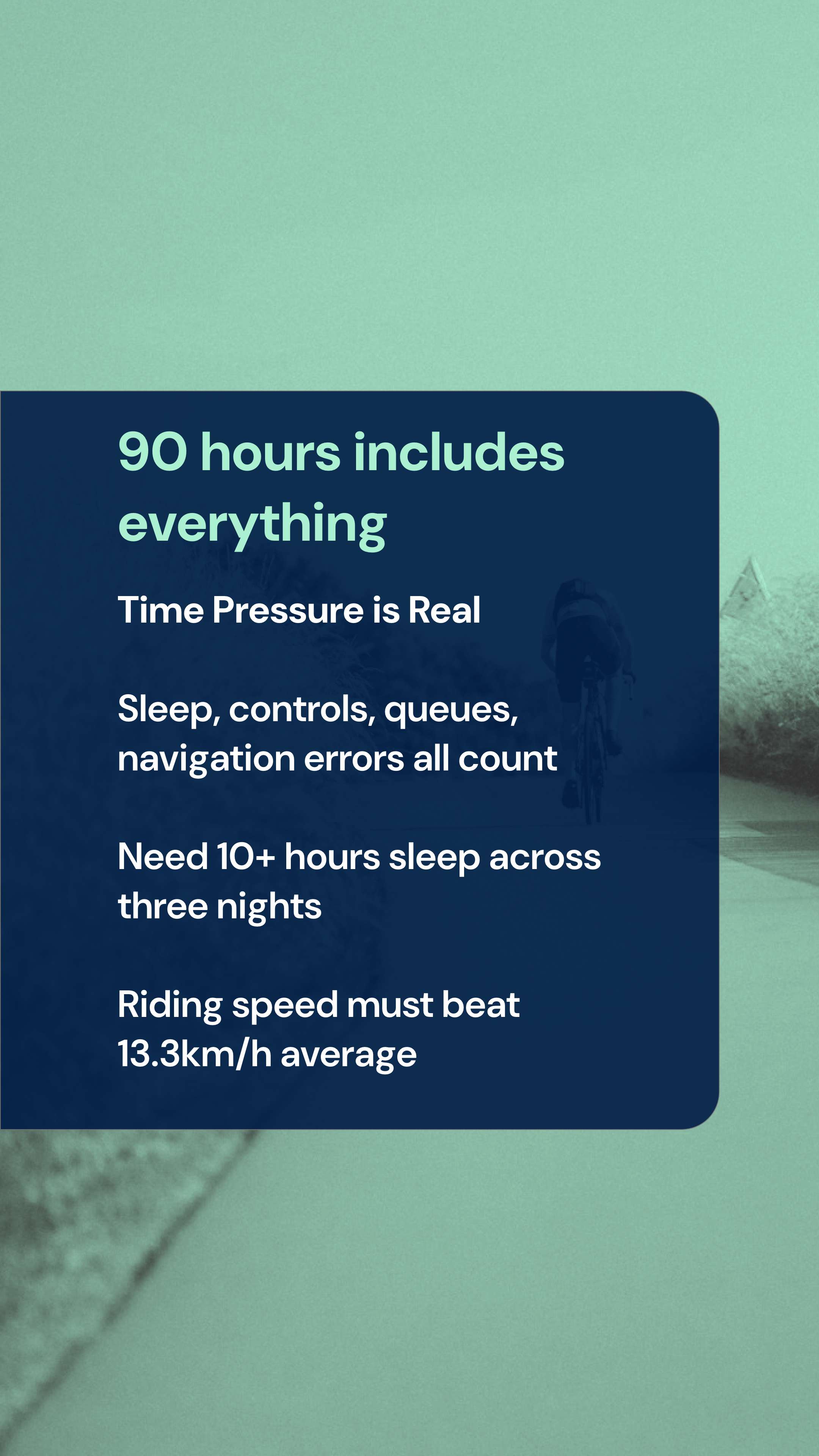
90 hours sounds generous. 1,200km divided by 90 hours is 13.3km/h average, barely faster than walking pace. Surely anyone finishing 600km brevets can manage that?
But 90 hours includes everything. Every control stop. Every meal. Every moment spent queuing for a brevet stamp. Every navigation error. Every sleep period. The actual time you spend riding needs to be significantly faster than 13.3km/h to account for all the time you spend not riding.
Most riders need sleep. Exactly how much varies enormously. Some riders operate on 90-minute power naps, others need 3-4 hour blocks to function. But everyone needs something. If you sleep 4 hours on night one, 4 hours on night two, and 3 hours on night three, that's 11 hours gone from your 90-hour budget. Add 30-45 minutes per control across multiple major controls, and you've lost more hours. You're now looking at riding 1,200km in considerably less than 90 hours, which means your average riding speed needs to be meaningfully faster than 13.3km/h.
The time limit catches riders who haven't practiced efficient control stops, haven't tested their sleep requirements on multi-day rides, or haven't paced conservatively enough early on. By the time you realise you're running out of time, you're often too fatigued to significantly increase your pace.
Multi-Day Fatigue: Beyond Qualification Distance
Completing a 600km brevet proves you can ride 600km. It doesn't necessarily prove you can ride 600km and then ride another 600km.
The fatigue that accumulates over multiple days feels different from single-day fatigue. After 24 hours riding, you stop, sleep properly, recover. At PBP, you get minimal recovery. By day three, cumulative fatigue affects decision-making, bike handling, and motivation in ways that day-one fatigue doesn't.
Simple tasks become difficult. Eating becomes a chore rather than a pleasure. Sleep becomes something you desperately crave but struggle to get properly. The mental fog that descends after multiple days makes everything harder, including the calculation of whether you're still on pace for the time limit.
Physical issues that might be minor irritations on a 400km brevet become serious problems over 1,200km. A slightly uncomfortable saddle becomes unbearable after two days. Hands that feel fine for 12 hours go numb after 40 hours. Minor knee discomfort becomes significant pain.
The hardest part of PBP often isn't any specific section of the route. It's the middle period when you're deep into the event, your body is breaking down, and the finish still feels distant.
Nutrition and Hydration: The Three-Day Challenge
Fuelling 1,200km over multiple days presents different challenges than fuelling a single 600km brevet.
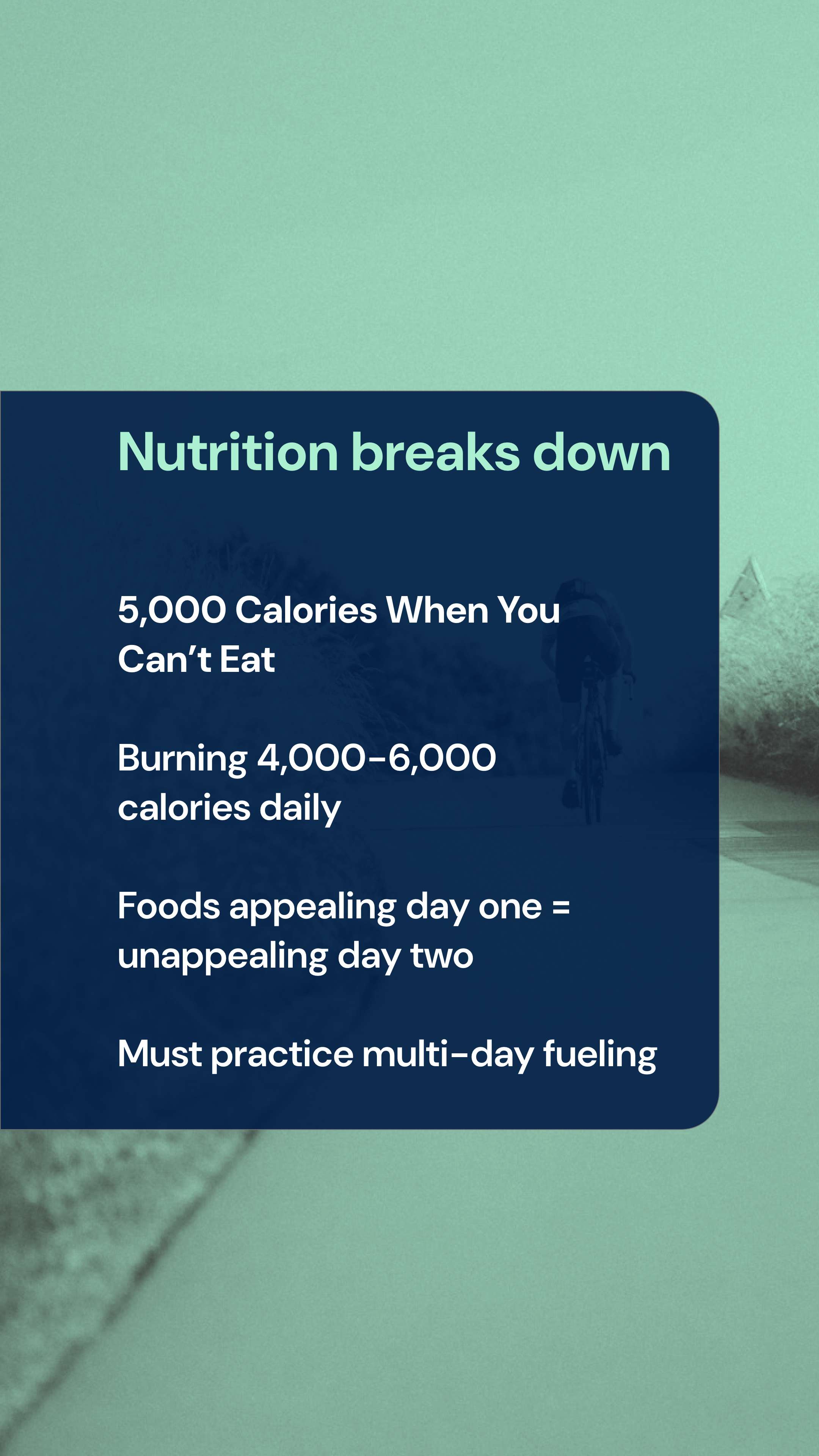
On a 600km ride, you can afford to under-eat slightly and make up the deficit afterwards. Over three days at PBP, cumulative calorie deficits catch up. You're burning 4,000-6,000 calories per day whilst trying to consume enough to keep functioning. By day two, many riders struggle to eat at all. Foods that tasted good on day one become unappealing. Your appetite diminishes precisely when you need calories most.
Control food at PBP is substantial. French controls typically offer hot meals, soup, pasta, bread, cheese, fruit, and sweet options. The food is good, but you're eating it whilst exhausted, often at 2am, surrounded by hundreds of other riders. What should be a pleasant meal becomes functional refuelling.
The challenge isn't just calories. It's maintaining hydration across multiple hot August days whilst managing electrolyte balance. It's eating enough at each control without overloading your stomach before riding. It's carrying sufficient backup food for the 80-100km between controls without weighing yourself down. It's forcing food down when you're not hungry but know you need it.
Some riders develop their nutrition strategy through trial and error on qualification rides. Others arrive at PBP having never practiced three consecutive days of riding and eating. The difference shows by Brest. Riders who've tested their multi-day nutrition systems know what foods they can tolerate when exhausted, how often they need to eat, and how to balance control meals with carried snacks. Those who haven't often struggle with energy crashes, digestive issues, or simply not eating enough to sustain the effort.
This isn't about having the perfect nutrition plan. It's about having practiced enough to know what works for your body across multiple days of hard riding. The 600km qualifier doesn't teach you this. Systematic preparation does.
International Logistics: Getting to France
You're riding in France, which means getting yourself and your bicycle across the Channel.
Ferry options include Dover-Calais, Portsmouth-Caen, and Portsmouth-St Malo. Some riders drive to France, others take the Eurostar to Paris then travel to Rambouillet. Whatever option you choose, factor in bike transport logistics. Trains may require bikes to be bagged or boxed, ferries usually allow bikes but check capacity and booking requirements in advance.
Rambouillet is southwest of Paris, roughly 50km from the capital. Accommodation in Rambouillet fills well in advance. Some riders prefer to stay in Paris and travel to the start on event day, though this adds complexity when you're already preparing for a 1,200km ride.
Understanding Start Groups and Time Limits
PBP uses three start groups, each with different departure times and time allowances:
90-Hour Group (most common): Starts Sunday August 22nd between 17:45 and 21:00. This is the standard group for most riders, offering the most buffer for sleep and mechanical issues. Most riders choose this option.
80-Hour Group (fast riders): Starts Sunday August 22nd between 16:00 and 17:00. For experienced riders who can maintain higher speeds and manage minimal sleep. This earlier start means you're ahead of the main field.
84-Hour Group (daylight preference): Starts Monday August 23rd between 05:00 and 06:00. For those who prefer to sleep Sunday night and ride mainly in daylight hours. Starting Monday morning means fewer crowds at the first controls as you're riding behind the main bulge of Sunday starters.
Your choice of start group determines your entire race strategy. The 90-hour group faces the heaviest congestion at early controls (Mortagne, Villaines, Fougères) as thousands of riders hit these points simultaneously. The 84-hour group avoids this congestion but has less time overall. The 80-hour group starts earliest but requires the fastest pace.
The Wave Start System
Within your chosen start group, riders are released in waves of approximately 300 riders every 15-20 minutes. Waves are designated by letters (Wave A, Wave B, etc.). You select your specific wave during registration, which is why pre-qualifying with a 2026 ride matters: it grants early access to select the most desirable wave times within your chosen group.
Tandems, triplets, and recumbents typically have dedicated waves. There's also traditionally a women's wave on Sunday at 17:15 for those who wish to ride together.
Your clock starts the moment your wave crosses the starting mat and doesn't stop for sleep, meals, or repairs. Each control point has specific closing times, typically spaced every 80-100km. Arrive after a control has closed, and you're disqualified regardless of how much time remains on your overall limit.
Mandatory Equipment
Before you're allowed to start, you must pass a bike check in Rambouillet. Required equipment includes:
- Front and rear lights (permanently fixed, not removable)
- Backup lights for both front and rear
- Reflective vest meeting EN ISO 20471 standards
- Helmet (mandatory for the entire event)
Fail the equipment check, and you won't be allowed to start. Check the official PBP equipment list well before the event as requirements may be updated.
Currency is euros. Your UK bank card works but check foreign transaction fees. Having cash for controls helps. Not all accept cards, especially smaller controls in rural areas.
Is PBP Right for You?
Paris-Brest-Paris isn't the natural next step after completing a 400km brevet. It's several significant steps beyond that.
You should be comfortable riding 200-300km regularly. Not occasionally. Regularly. The 600km qualifier gives you a sense of distance, but PBP doubles it and adds international logistics, larger crowds, and tighter time management.
You need to have tested your ability to function on limited sleep across multiple days. One night of disrupted sleep is manageable. Multiple nights of minimal sleep whilst continuing to ride requires knowing how your body responds and how much sleep you actually need.
You should be confident navigating in unfamiliar areas, ideally using both GPS and map reading. Getting lost costs both time and mental energy.
If you haven't ridden multi-day events before, gaining that experience before attempting PBP makes sense. Qualifying brevets are single-day events. PBP is multi-day. The skills aren't identical.
None of this means PBP is impossible or that you shouldn't attempt it. Thousands of riders successfully complete it every four years, including many doing it for their first time. But they're the riders who understood what they were signing up for, prepared systematically, and respected the distance.
PBP rewards preparation, conservative pacing, and robust systems for managing controls, sleep, and nutrition. It punishes overconfidence, poor planning, and underestimating what 1,200km across France actually demands. If you're ready to commit to PBP 2027 and want structured support through both the 2026 priority rides and 2027 qualification series, event-specific coaching for Paris-Brest-Paris can guide that preparation systematically.
Preparing for PBP: Beyond the Qualification Rides
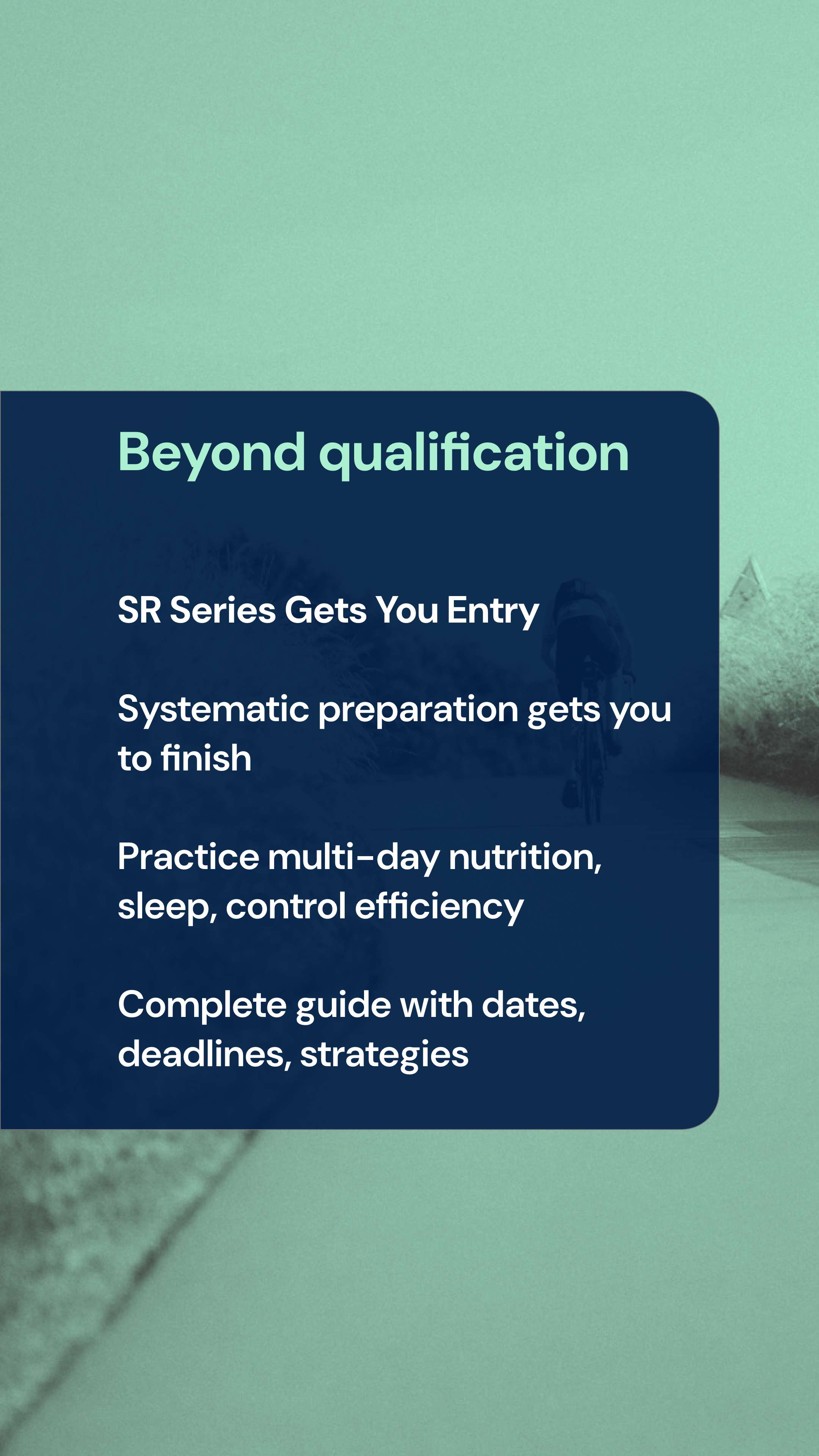
Completing your Super Randonneur series proves you can ride the distances. It doesn't automatically prepare you for the multi-day fatigue, control management, and pacing discipline that PBP demands.
The riders who finish strong are those who've practiced sleeping with hundreds of other riders around them, tested their nutrition over consecutive long days, and developed conservative pacing strategies that work for 1,200km, not just 600km. They've ridden overnight multiple times. They've navigated when exhausted. They've managed multi-day fatigue, not just single-day efforts.
The SR series qualifies you to enter PBP. Systematic multi-day preparation gets you to finish. If you want structured preparation that addresses these demands, not just the qualification requirements, Paris-Brest-Paris coaching provides the framework.
Your Timeline for PBP 2027
If you're considering Paris-Brest-Paris 2027, here's your timeline:
2026 (Priority Registration Phase): Ride the longest BRM distances you can during 2026. Aim for 600km or longer to secure early priority registration in January 2027. Without a 2026 ride, you risk not getting a place at all.
Early 2027 (Pre-Registration): Based on your longest 2026 ride, pre-register during your allocated window (January to March 2027). Pay your €50 deposit and select your start group and wave. The 90-hour group (Sunday evening start) is most common, the 84-hour group (Monday morning start) avoids early control congestion, and the 80-hour group (Sunday afternoon start) suits faster riders.
November 2026 to June 2027 (Mandatory Qualification): Complete your Super Randonneur series: 200km, 300km, 400km, and 600km brevets. All must be ACP-sanctioned rides with unique homologation numbers. Don't leave your 600km until late spring. The deadline is June 30th 2027, and if you fail a late attempt, there won't be time for another.
May to July 2027 (Final Registration): Upload your SR series homologation codes by the deadlines (May 29th for three rides, July 4th for the final ride). Miss these deadlines and you lose your place despite having qualified.
August 2027: Ride 1,200km across France. Return to Rambouillet within 90 hours. Collect your finisher's medal.
The registration will open, and thousands of riders will commit to something genuinely difficult. Make sure you're ready for what you're committing to.
Read our Paris-Brest-Paris coaching guide that prepares you for the the challenges.