
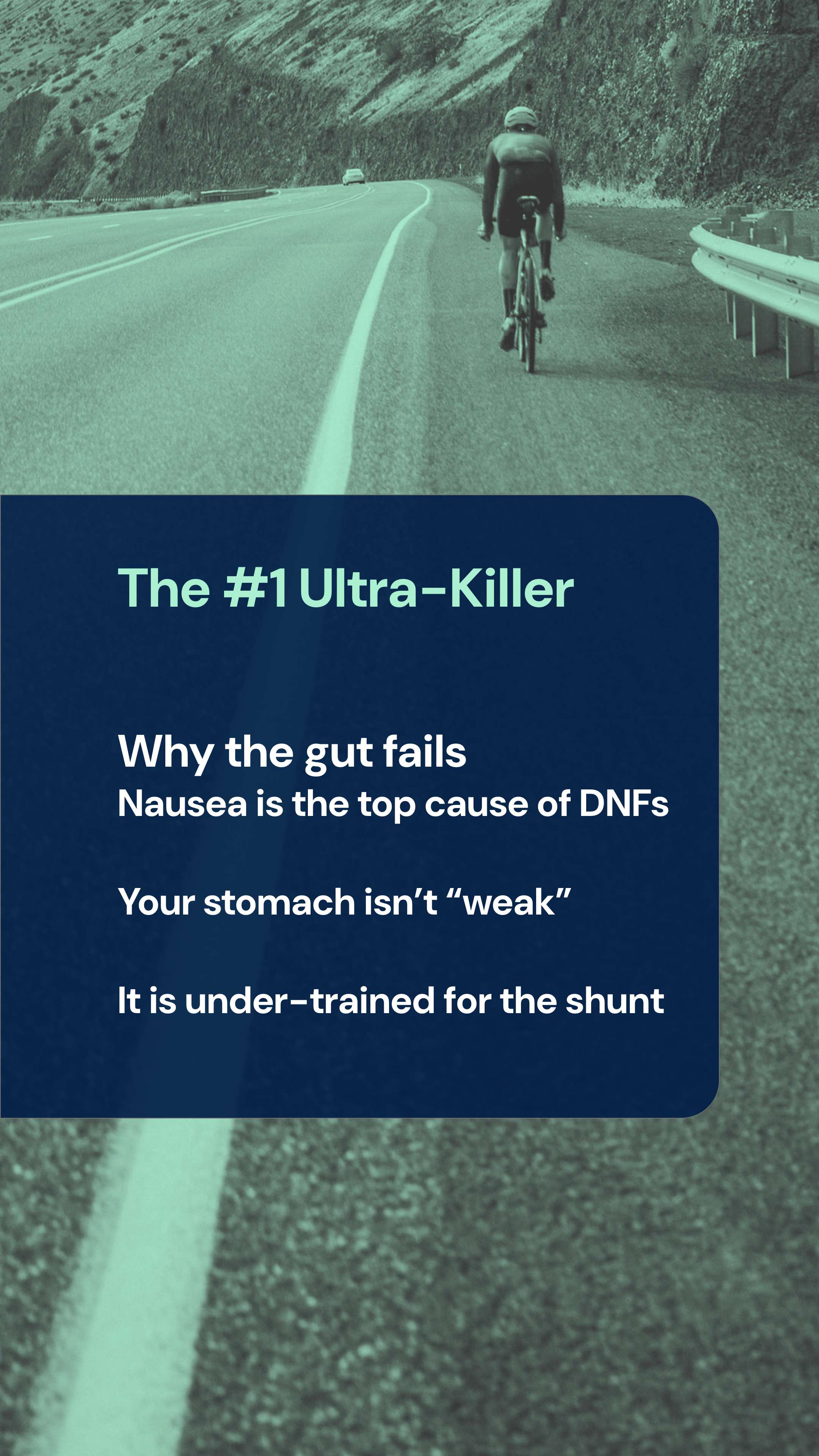
In the world of ultra-distance cycling, we spend thousands of pounds on aerodynamic optimisation, ceramic bearings, and ultra-lightweight carbon. We obsess over Power-to-Weight ratios and VO2 max. Yet, the statistics from events like the Transcontinental or the Pan Celtic Race tell a recurring story: the most common reason for a DNF (Did Not Finish) isn’t a lack of leg power—it is the total collapse of the digestive system.
We have all been there. It is 3 AM, you are 300km into a 600km audax, and the very thought of an energy bar makes you want to heave. Your stomach feels like a bloated, sloshing lead weight. I’ve been there myself, staring blankly at a petrol station shelf in the middle of the night, physically unable to swallow a single calorie despite knowing I was "bonking."
For years, the community treated these moments as "bad luck" or a lack of mental toughness. But the research into Exercise-Induced Gastrointestinal Syndrome (Ex-GIS) proves otherwise. Your gut is not a static organ; it is a trainable system. If it fails, it isn't because you are "weak"—it’s because you haven't trained it to handle the specific physiological demands of ultra-endurance.
The physiology of the "Blood Shunt" in endurance cycling
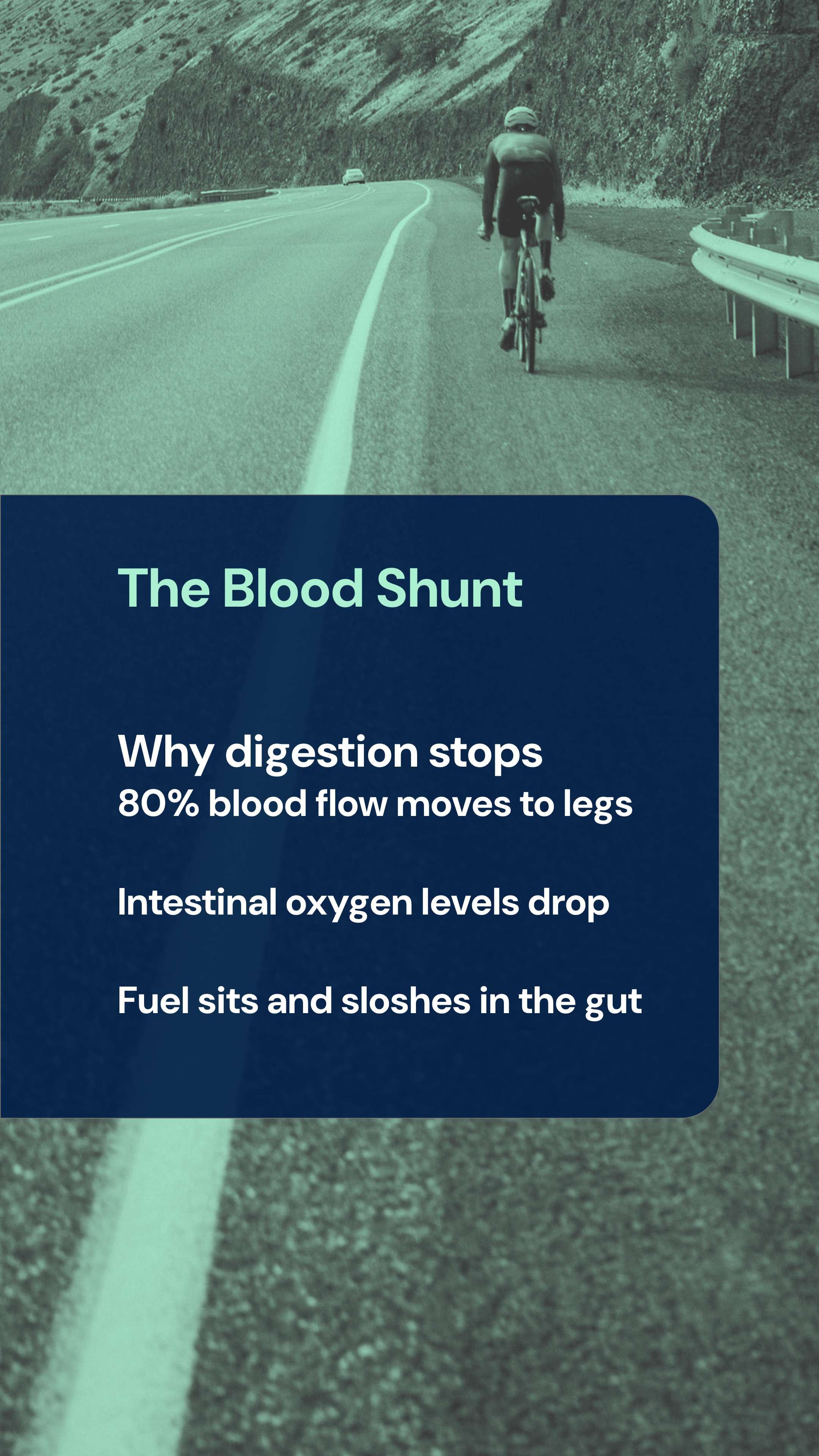
To understand how to fix the problem, we have to understand the physiology. During long-duration exercise, your body undergoes a process called splanchnic hypoperfusion. Essentially, your body prioritises survival by shunting up to 80% of blood flow away from the stomach and intestines to the working muscles and the skin for cooling.
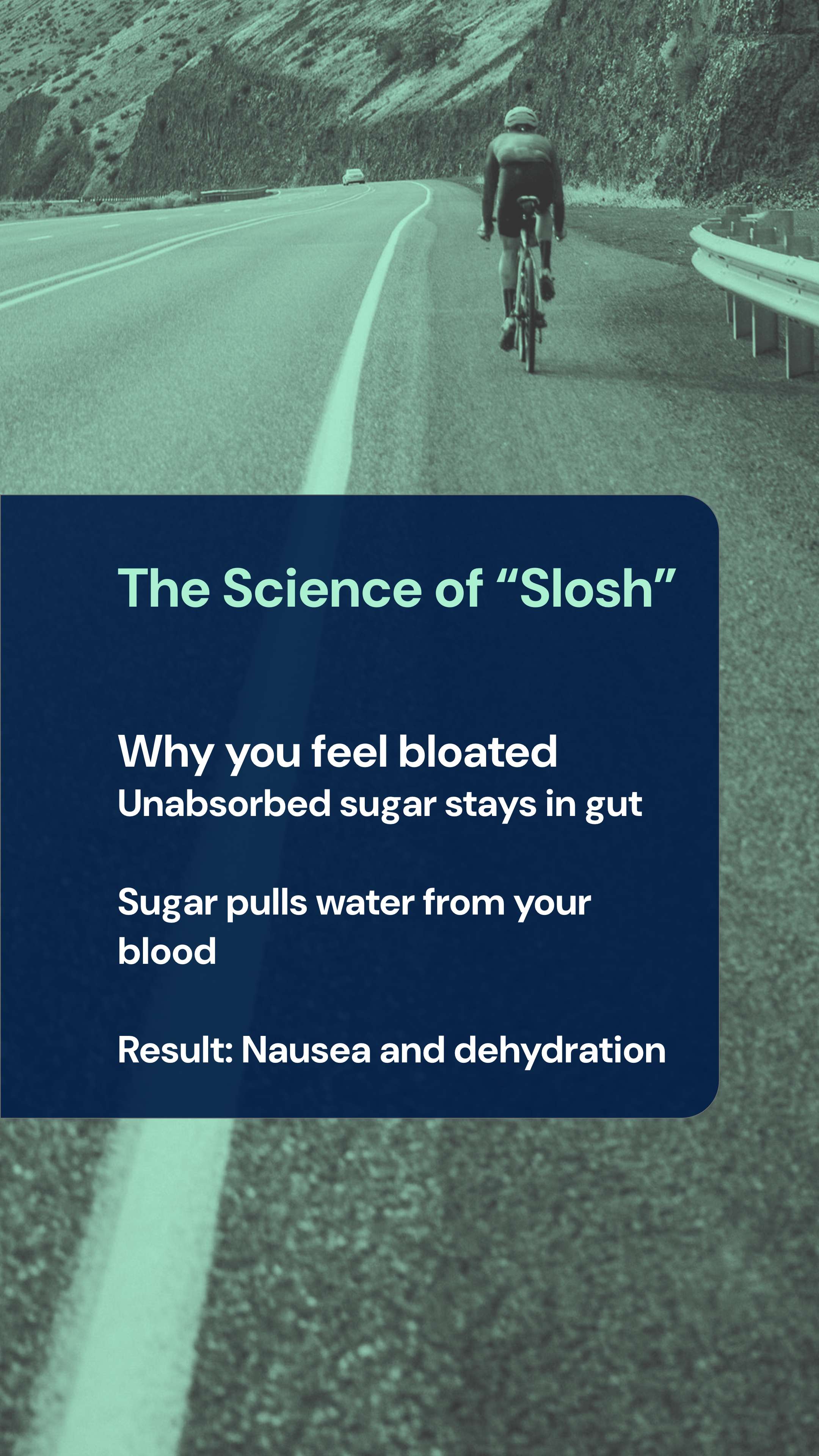
This lack of oxygen to the gut (ischaemia) causes the intestinal lining to become more permeable—what is commonly referred to as "leaky gut." Combined with the constant mechanical jarring of the bike and the heat produced by sustained effort, this leads to systemic inflammation, nausea, and the dreaded "slosh" where nutrients sit in the gut rather than moving into the bloodstream.
Ultra-cycling nutrition: Why "eating by feel" leads to failure
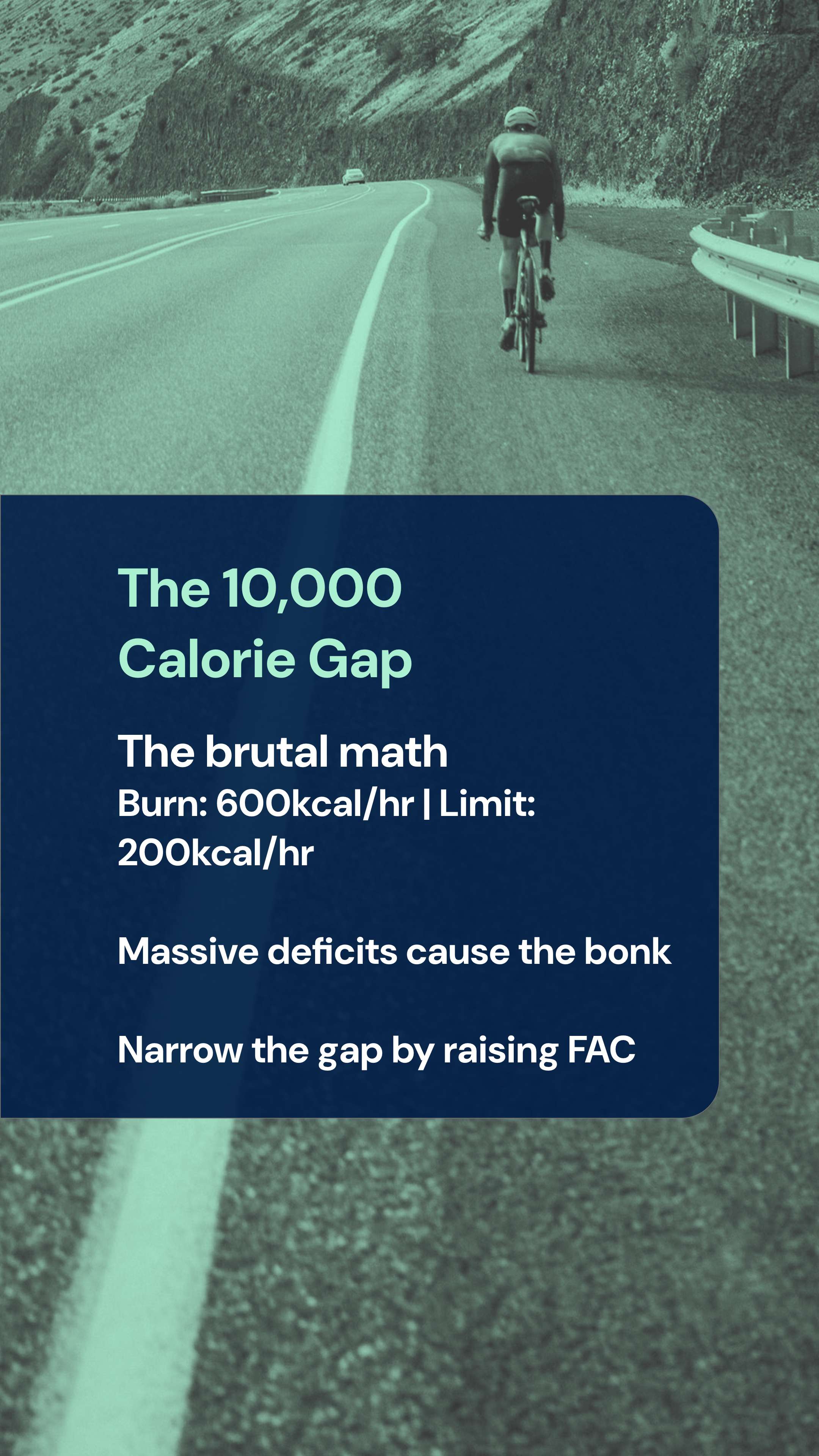
Most ultra-riders significantly underestimate the caloric deficit they are creating. A rider moving at a steady endurance pace might burn between 500 and 800 calories per hour. However, the average untrained human gut can only absorb roughly 200 to 250 calories per hour of mixed nutrients.
Over a 24-hour period, that creates a deficit of nearly 10,000 calories. By day three of a multi-day event, that deficit becomes an existential threat to your performance. The only way to survive is to narrow that gap by increasing your Functional Absorptive Capacity (FAC).
Measuring your "Functional Absorptive Capacity" (FAC)
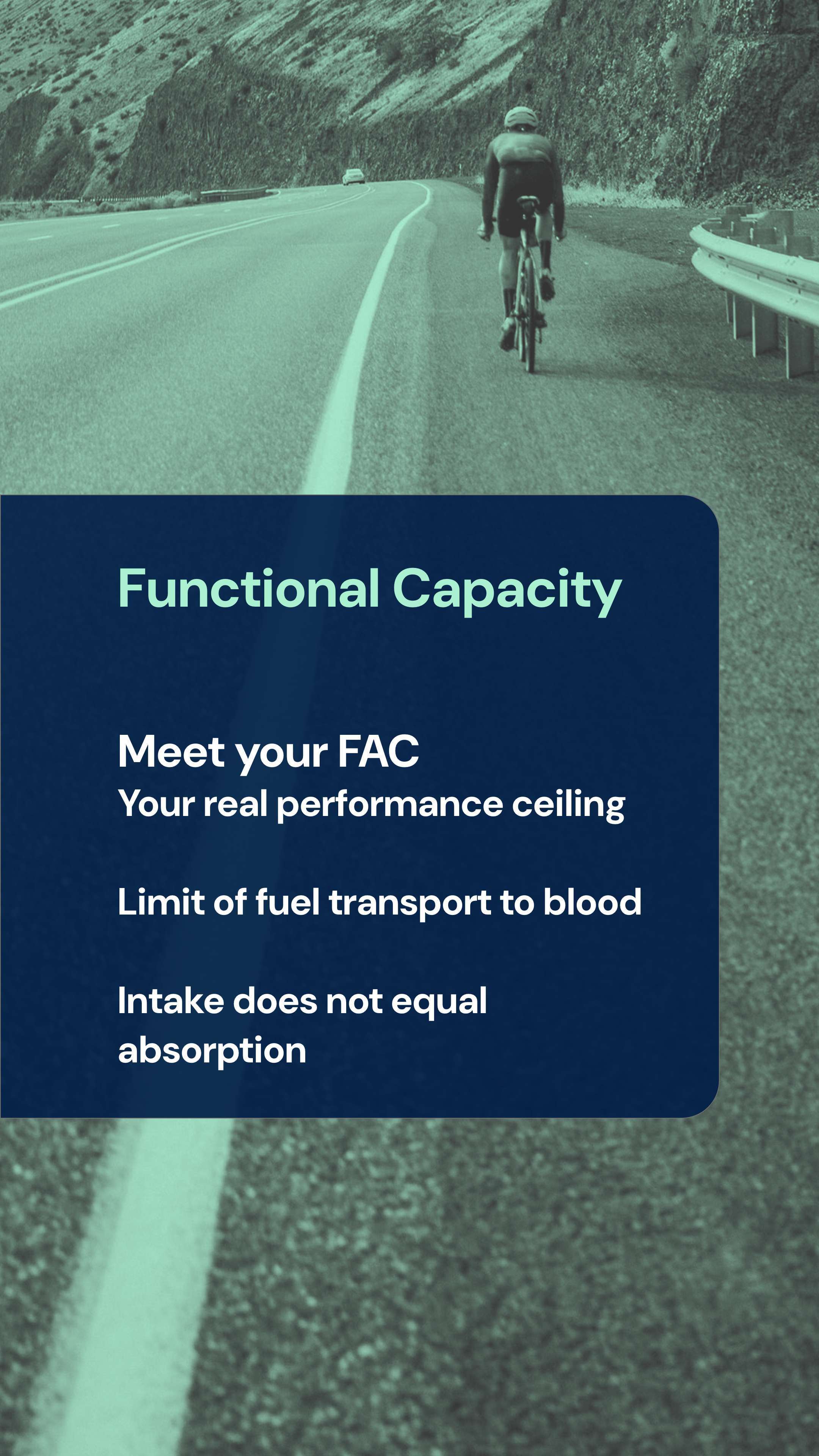
In my coaching practice, we talk about a metric that is arguably more important for ultra-cycling than FTP: Functional Absorptive Capacity.
While FTP tells us what your legs can produce, your FAC tells us how much fuel your gut can actually transport into your bloodstream while under the stress of a 15-hour ride. If your legs can push 200W, but your gut can only absorb enough fuel for 150W, your race has a built-in expiry date.
How we quantify the "Limit"
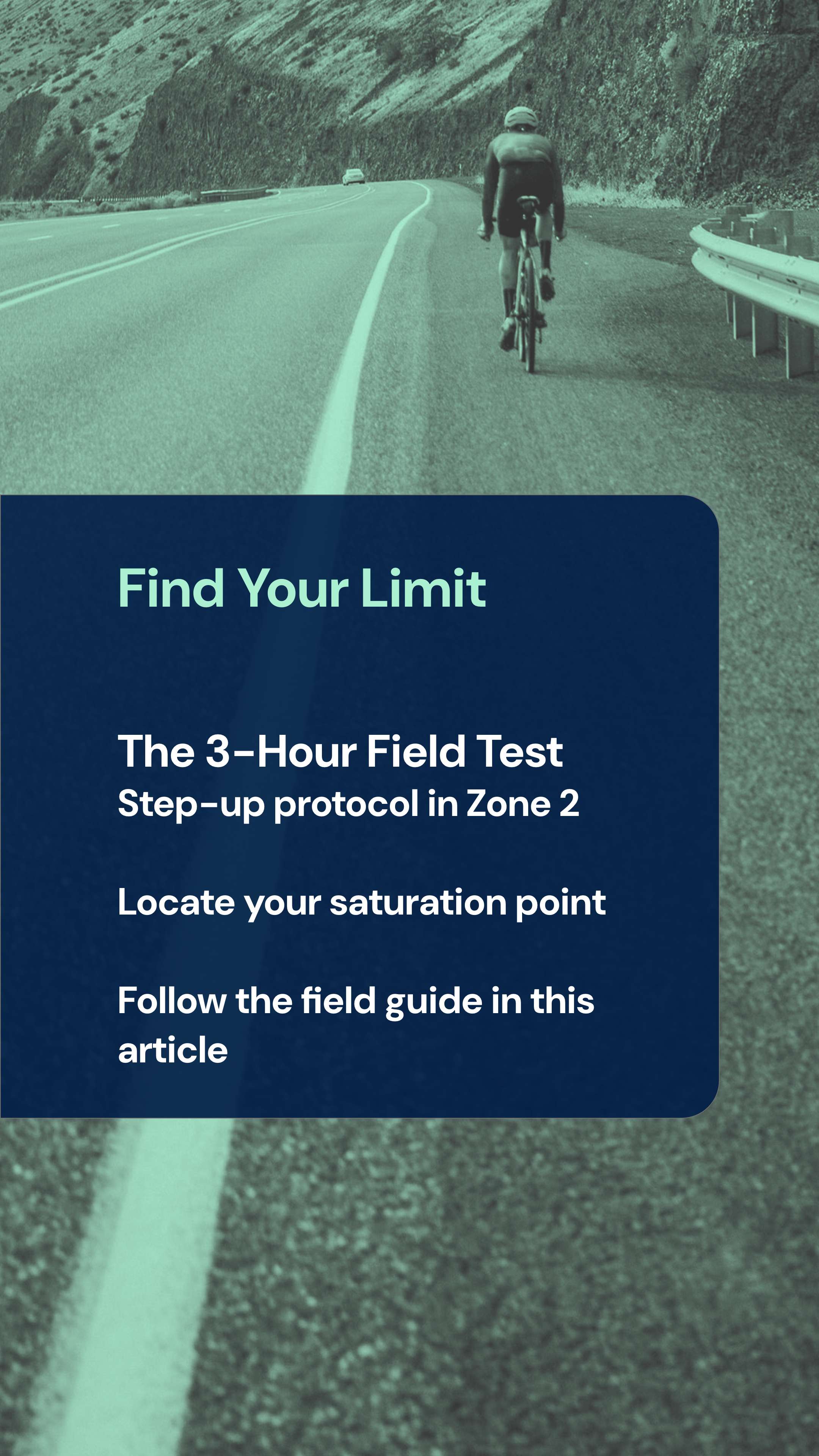
We don't rely on trial and error. We use a Gut-Stress Field Test to find your specific absorption ceiling. By incrementally increasing carbohydrate intake during a controlled endurance-zone ride, we track the relationship between caloric intake and a Gut Comfort Score.
We are looking for the "Saturation Point." This is the moment where your SGLT1 transporters (the "gates" in your intestinal wall) reach their limit. When this happens, unabsorbed glucose sits in the small intestine, drawing water out of your blood via osmosis. This is the physiological cause of the bloating and nausea that many riders mistakenly attribute to "drinking too much."
How to test your gut: The 3-hour "Step-Up" protocol
If you want to find your current baseline, try this protocol on your next endurance-paced (Zone 2) training ride. Use a 1–10 scale to rate your gut comfort (1 being perfect, 10 being "nausea-induced stop").
Hour 1: Target 40g of carbohydrates (e.g., one large banana + 500ml of standard electrolyte drink).
Hour 2: Increase to 60g of carbohydrates (e.g., one energy bar + 500ml of carbohydrate-mix drink).
Hour 3: Increase to 80g+ of carbohydrates (e.g., two gels + 600ml of carbohydrate-mix drink).
The Result: If your comfort score jumps significantly during Hour 3, you have found your current Functional Absorptive Capacity. This is the ceiling we work to raise through periodised coaching.
The 3-step protocol to an "Iron Gut"
As a coach, my focus is not on prescribing clinical nutrition, but on managing the physiological adaptation of your digestive system. We treat the gut with the same periodisation we apply to your intervals.
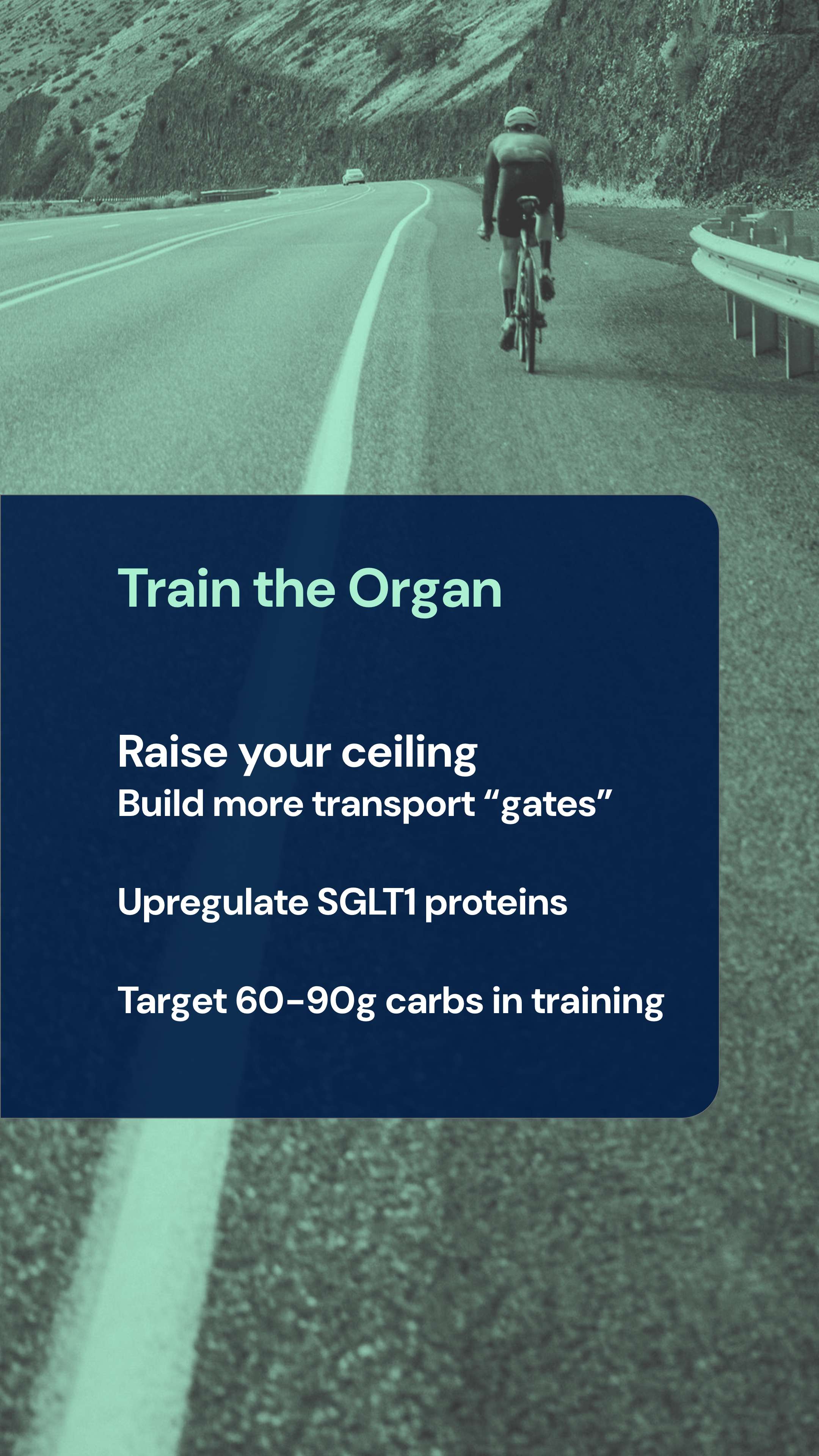
1. Upregulating Carbohydrate Transporters - Research confirms that the gut is highly adaptable. Consuming high carbohydrates in training (targeting 60g–90g per hour) increases the density and activity of SGLT1 transporters. By doing this in training, you are literally building more "gateways" for energy to enter your bloodstream.
2. The "Buffer" Training Ride - We integrate specific threshold efforts while following your race-day intake to see how your system responds when blood flow is being pulled away from the gut most aggressively. We want to find your "absorption ceiling" before you reach the start line.
3. Managing Mechanical and Postural Stress - Ultra-cycling involves constant "vertical oscillation." This mechanical stress irritates the gut lining. We look at your core stability and bike fit; a collapsing core in the 15th hour puts immense physical pressure on the gastric system. A better fit is about giving your digestive system "breathing room."
High-altitude gut training for Alpine events
Digestive challenges compound at altitude. At 2,600m on the Galibier, your body processes food differently than at sea level, reduced oxygen affects not just your legs but your entire system, including digestion. For events like L'Etape du Tour (170km, 5,400m of Alpine climbing), you're asking your gut to process substantial calories whilst climbing consecutive passes at altitude when appetite naturally disappears.
This requires specific gut training: practicing sustained fuelling during long climbing efforts, testing what works when you're hours into a ride and nothing appeals, and developing systems that function when altitude compounds the challenge. Your gut adaptation must match the specific demands of your event. Multi-hour climbing at altitude presents different challenges than flat ultra-distance riding.
Training your Functional Absorptive Capacity for Alpine climbing conditions means progressive practice during long rides with significant elevation, not just increasing volume on flat routes.
The coach’s perspective: Don’t leave it to chance
I have spent years deconstructing my own "dark zones" and GI failures. What I’ve learned is that a training plan that only looks at Power and Heart Rate is only half a plan.
If you are targeting a major ultra-event, your training must include a protocol for digestive resilience. We need to ensure that when you are 48 hours into a race, your "internal engine" is just as capable as your legs. In my coaching, we build the system so that when the 2 AM wall hits, your body is actually capable of processing the fuel you give it.
Ready to build a more resilient engine?
If you are tired of your stomach being the "limiter" in your performance, let’s change the way you prepare. I work with riders to integrate these scientific gut-training protocols into their seasonal plans, ensuring you arrive at the start line with a system that can go the distance.
Reach out for a free coaching consultation if you too have had gut problems during rides.
Research References & Footnotes
Costa, R. J. S., et al. (2017). Systematic review: Exercise-induced gastrointestinal syndrome—implications for health and intestinal disease. Alimentary Pharmacology & Therapeutics. Read the Study
Jeukendrup, A. E. (2017). Training the Gut for Athletes. Sports Medicine. Read the Study
Pfeiffer, B., et al. (2012). Carbohydrate oxidation from a drink during 60 min of running: 2:1 glucose:fructose vs. glucose only. Medicine & Science in Sports & Exercise. Read the Study
Glossary of Terms
Absorptive Capacity (Functional): The practical limit of the gastrointestinal tract to transport nutrients into the bloodstream while under exercise-induced stress.
Anorexigenic Effect: The biological suppression of hunger signals due to high levels of stress hormones like cortisol.
Ex-GIS (Exercise-Induced Gastrointestinal Syndrome): A suite of symptoms caused by reduced blood flow and heat stress in the gut during exercise.
GLUT5: The specific transporter protein responsible for moving fructose across the intestinal wall.
Ischaemia (Intestinal): A restriction in blood supply to the gut tissues, common during "blood shunting" to working muscles.
Osmotic Pull: When unabsorbed sugars draw water from the blood into the gut, causing bloating and "sloshing."
SGLT1: The primary transporter protein for glucose and sodium in the small intestine.
Splanchnic Hypoperfusion: The technical term for reduced blood flow to the digestive organs during exertion.